A fantastical story built around alchemy and conjuring, the novel follows adventures and humor centered on artificial life and bizarre inventions. A Victorian atmosphere runs through the whole book.
A sequel to Ender’s story in which the adult Ender travels to a new world as a 'Speaker' and tells the stories of the dead. It explores misunderstanding with an alien species, cultural friction, atonement, reconciliation, and deep questions of ethics and religion.
A novel about war and the life that follows it. Focusing on returned soldiers and former servicemen, it probes isolation, trauma, and the friction between private wounds and society.
A collection of poems from the early to middle period. Incorporating regional characteristics, history, and personal memories, she poetically develops a postcolonial perspective.
A classic essay collection that criticizes interpretive excess and asks readers to attend to form and sensuous experience. It is Susan Sontag's most influential early book.
There has long been a need for an accessible, comprehensive--and affordable--single-volume life of Swift. This thoughtful, judicious biography promises to fill that need for our generation. Few author's reputations have fluctuated as wildly as Jonathan Swift's. From the beginning, critics and biographers divided into two camps--one hailing a champion of liberty, the other reviling a sadistic misanthrope. For years, moreover, an understanding of Swift's life was clouded by legends of his madness and mysteries surrounding his romantic attachments. Modern scholarship had swept all of this away, however, giving us a much sounder factual basis for comprehending the man's life and work. David Nokes portrays the author of Gulliver's Travels in his multifarious roles as satirist, politician, churchman, and friend. Combining the latest findings of Swiftian scholarship with an astute critical eye, he restores a proper balance between the specialist critics who have overemphasized specific themes or genres in Swift's work and the generalist critics who have missed many of the particularities of Swift's ironies. In so doing, Nokes gives us a biography very much in the spirit Swift himself endorsed: "a conservative humanism which saw specialisation as a first dangerous step towards that distorted simplification of complex human phenomena which characterized the views of all factions and fanatics." About the Author: David Nokes is Lecturer in English at King's College, the University of London.
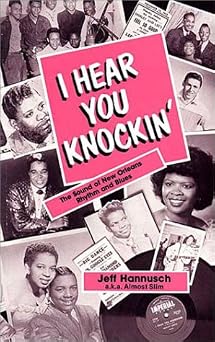
A music history that traces New Orleans rhythm and blues through the testimony of singers, players, and recording scenes. It gives the city’s music culture a vivid, three-dimensional shape.
First published in 1957, Maurice Cranston's book is recognized as the definitive biography of John Locke. It provides that rare combination of sound scholarship, a wealth and variety of original source material, and a lively, compelling narrative.