A history of the Seneca from the late colonial and early reservation period that centers on Handsome Lake's visions and the community's religious revitalization. It portrays the renewal of an Indigenous society at the intersection of politics, religion, and culture.
Why do the storks no longer come to the little Dutch fishing village of Shora to nest? It was Lina, one of the six schoolchildren who first asked the question, and she set the others to wondering. And sometimes when you begin to wonder, you begin to make things happen. So the children set out to bring the storks back to Shora. The force of their vision put the whole village to work until at last the dream began to come true. Winner, 1955 Newbery Medal Notable Children's Books of 1940–1970 (ALA) 1963 Lewis Carroll Shelf Award
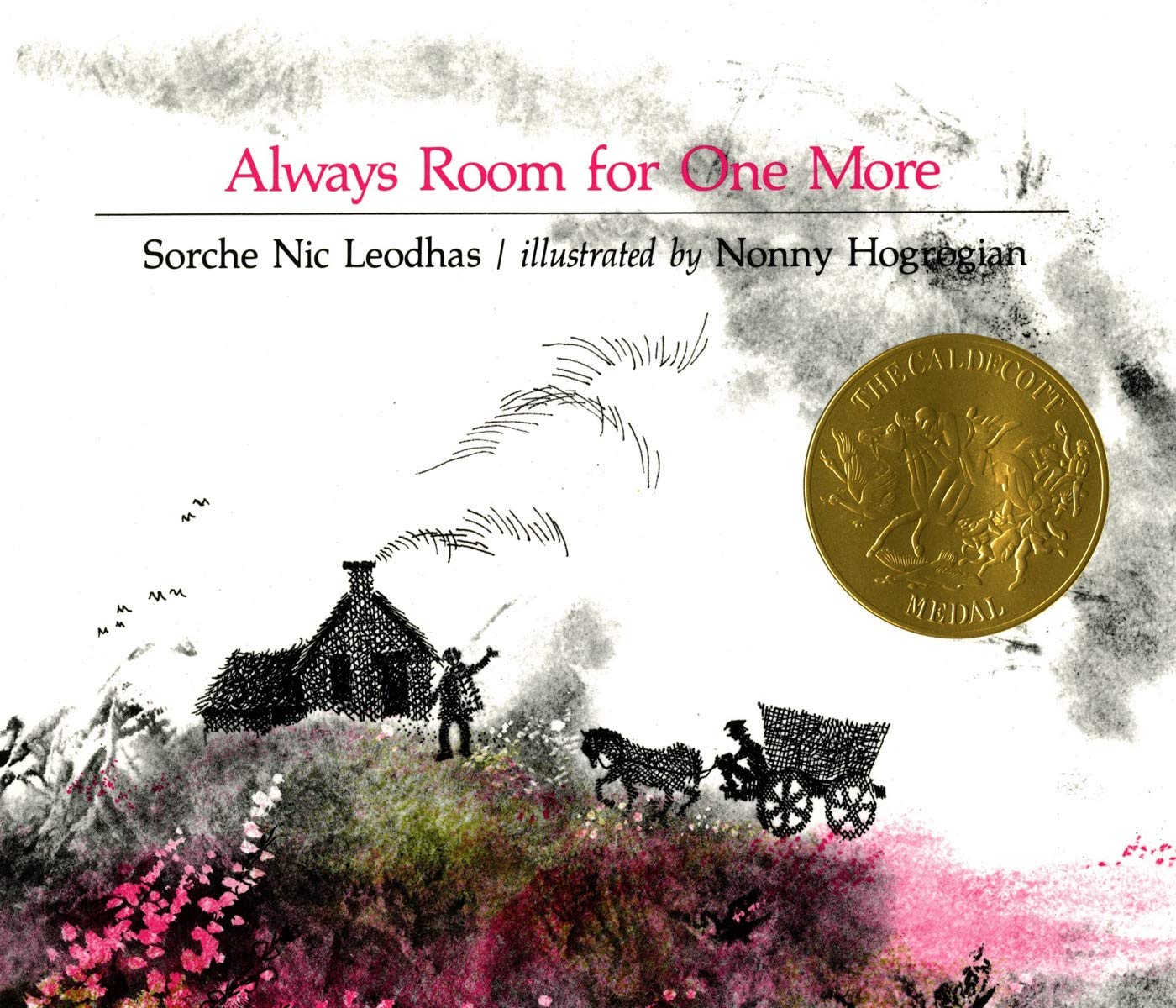
Winner of the Caldecott Medal. From children's book author Sorche Nic Leodhas and illustrator Nonny Hogrogian comes a heartwarming story, Always Room for One More. Lachie MacLachlan, the generous hero of this enchanting tale, is the exception to the rule that the Scots are a thrifty lot. In his "wee house in the heather," where he lives with his family of twelve, he welcomes to his hearth every weary traveler who passes by on a stormy night. "There's always room for one more," says Lachie, and how his grateful guests say a wonderful "Thank you" provides a delightfully warm and tender ending to this hilarious tale of kindness. Always Room for One More is the winner of the 1966 Caldecott Medal.
A sequence of poems shaped by Byzantine myth and religious imagery, it weaves themes of divinity, suffering, and love into a fragmented and dreamlike mode of expression. As the starting point of Ekelöf’s later Diwan trilogy, it condenses his experimental spirit and symbolic intensity.
World's Best Science Fiction: 1971 is an annual anthology edited by Donald A. Wollheim and Terry Carr. It gathered notable stories from the previous year as an annual survey.
Lytton Strachey's Queen Victoria is a compact biography that traces the queen's life through both private experience and public power. Rather than celebrating monarchy at face value, it presents Victoria as a figure shaped by feeling, judgment, and tension with her age.
This collection of short fiction centers on a working-class family, and the title story distills aging, memory, estrangement, and forgiveness into quiet conversation. Its restrained style brings out the pain and intimacy of everyday life at the same time.
An Armenian folktale built through cumulative repetition as a fox bargains with people and animals. Soft colors and carefully balanced compositions give the exchange tale a calm, lyrical tone.
The Headless Cupid is a children's novel by Zilpha Keatley Snyder. First published in 1971, the book was a Newbery Honor book for 1972. It was also nominated in 1972 for the Hans Christian Andersen Award. It is the first in the four-book series about the Stanley family, followed by The Famous Stanley Kidnapping Case, Blair’s Nightmare, and Janie’s Private Eyes.