
HarperCollins
It's Like This, Cat
Emily Cheney Neville, Emil Weiss
A New York coming-of-age story about a boy and his cat.
View new release information for awarded works
3476 new books
Emily Cheney Neville, Emil Weiss
A New York coming-of-age story about a boy and his cat.

Evelyn Waugh
The first volume of Evelyn Waugh’s war trilogy follows Guy Crouchback as he enters military service during the Second World War. It mixes irony and humor with a bleak look at the absurdity of war and human relations.

John Le Carre
Amazon.co.jp: The Spy Who Came in from the Cold : Le Carre, John: 洋書

Hester Burton
The 1963 Carnegie Medal winner follows a bookseller's family in 1801 London as political persecution and social unrest close in around them.

ルース・スタイルス・ガネット, ルース・クリスマン・ガネット, わたなべ しげお, 子どもの本研究会
The first book in a trilogy in which the boy Elmer sets out to help a baby dragon in trouble. It unfolds as an imaginative adventure filled with clever solutions and playful wonder.

Philippa Pearce, Susan Einzig
A recipient of the Carnegie Medal, this is the story of a young boy's discovery of an enchanted, secret garden which no one else can see. The garden is too fantastic for the adults to believe, but for Tom it is a place of marvellous adventures.

アンドレ ジイド, 川口 篤
An experimental novel inspired by a counterfeit-coin scandal and a teenage suicide. Built around Edouard's notebook, it follows a web of young friendships, desire, and the unstable boundary between truth and falsehood.

Anna Langfus
A novel about a Holocaust survivor trying to return to ordinary life while being pulled back by loss and memory. Its quiet style measures the weight of the time that follows survival.

William Faulkner
A picaresque novel that follows Lucius, Boon, and Ned in a small-scale adventure while sketching the South and the texture of growing up. Beneath its lightness, it quietly brings responsibility and morality into view.

E. Seeger
This concise history traces China from mythic origins to the founding of the republic in a form accessible to younger readers. By weaving together political and cultural history, it presents the long sweep of Chinese civilization with clarity.
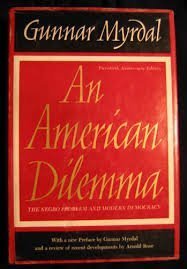
Gunnar Myrdal
A landmark study of race relations and American democracy.

Theodosius Dobzhansky
The Silliman Lectures at Yale University have been responsible for many books which have greatly influenced the progress of scientific work in the twentieth century. One of the foremost scientists of our time, Theodosius Dobzhansky, recipient of the Elliot and Kimbler prizes, and Da Costa Professor of Zoology at Columbia University, delivered the Silliman Lectures given in honor of the Centennial of Charles Darwin’s On the Origin of Species . Based upon these lectures, Mr. Dobzhansky’s latest book, Mankind Evolving, now takes its place beside his other great works. With a profound knowledge of the biological theory of evolution and modern genetics, Mr. Dobzhansky explores the possibilities of understanding mankind as a product of evolution and as an evolving whole. Human evolution, contends Mr. Dobzhansky, cannot be understood as a purely biological process, nor can it be adequately described as a history of culture; rather, it is the interaction between the two components of evolution—the biological, or organic, and the cultural, or superorganic. The interdependence of these two components is brought out most clearly if we consider that they both serve the same function—the adaptation to and control of man’s environment. Drawing upon evidence from human biology, and the study of fossil ancestors of now-living mankind, Mr. Dobzhansky explains how the biological process led to the inception and advancement of culture as an instrument of adaptation. In producing the genetic basis of culture, biological evolution has transcended itself: it has produced the superorganic. The superorganic, Mr. Dobzhansky points out, has not annulled the organic; and human welfare, both in individuals and in societies, is predicated upon the health of the genetic endowment of human population. Man has not only evolved but is evolving, and Mr. Dobzhansky expounds the thesis that the genetic basis of culture should be improved, or at the very least should not be allowed to deteriorate. Mankind Evolving is of vital importance not only for scientists but for all who are concerned with the health of future generations. Winner of the Anisfield-Wolf Award and the Pierre Lecomte Du Nuoy Prize. "The most interesting . . . the most judicious scientific treatise that has ever been written on the nature of man . . . displays tremendous erudition over an even broader range of knowledge than is found in its author's previous works. . . . No one who is concerned with his own nature and that of mankind—and this included poets, philosophers, and theologians—can afford to miss this book."—George Gaylord Simpson.