Jerusalem Prize for the Freedom of the Individual in Society
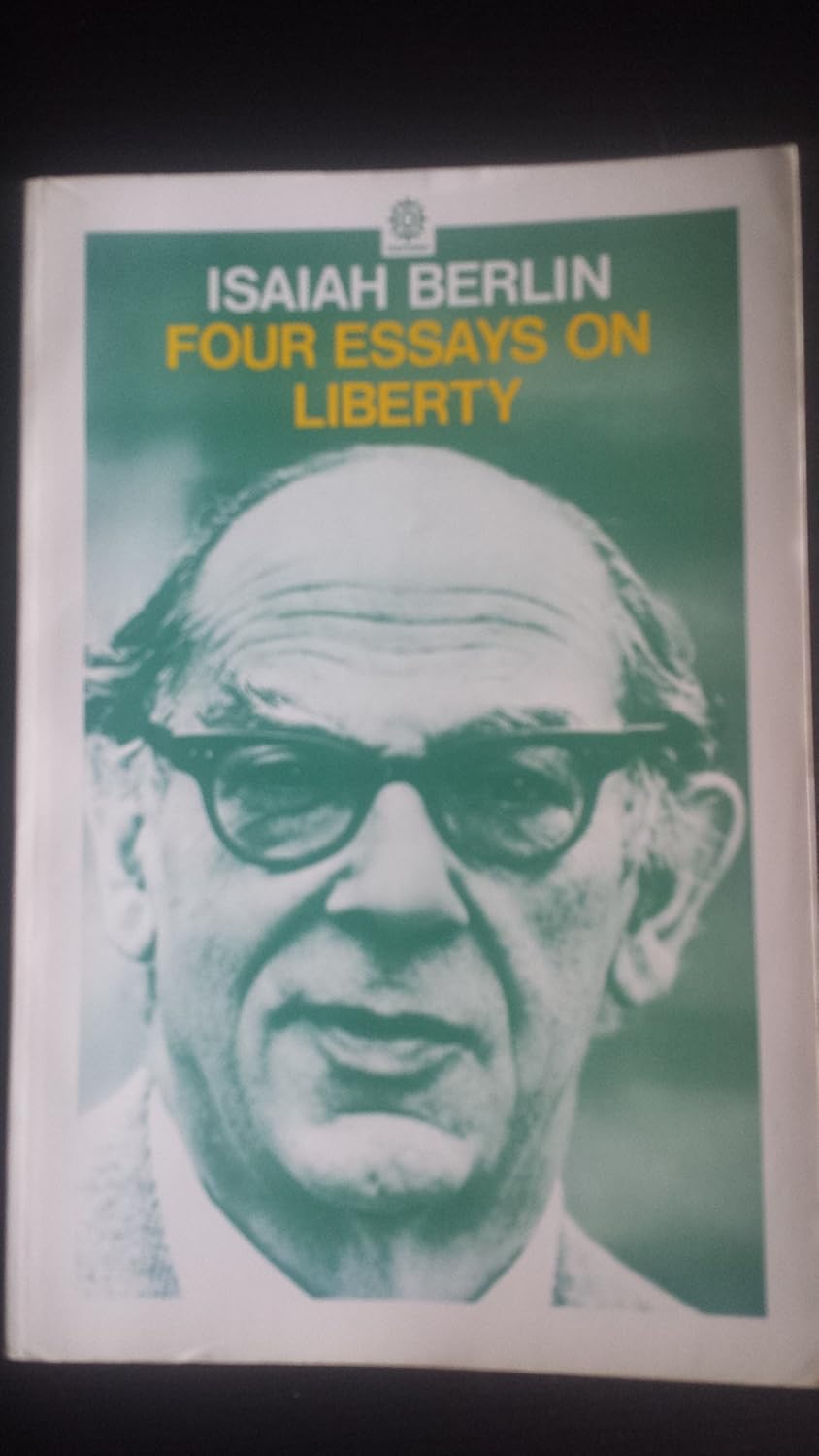
Four Essays on Liberty (Oxford Paperbacks)
Four essays examine liberty, political thought, and the complexity of value pluralism. It is Isaiah Berlin's most important book.
Work Information
A book that treats freedom not as a slogan, but as a difficult problem in intellectual history.
Berlin's arguments force readers to ask what must sometimes be sacrificed in order to protect freedom. The book remains a classic of twentieth-century political thought.
Book Information
- Publisher
- Oxford Paperbacks
- Published
- 1990-06-01
- Pages
- 288 pages
- Language
- 英語
- Size
- 13.03 x 1.93 x 19.69 cm
- ISBN-13
- 9780192810342
- ISBN-10
- 0192810340
- Price
- 23891 JPY
- Category
- 洋書/Politics & Social Sciences/Philosophy/Modern
Focusing on related aspects of individual liberty, this volume contains the essays Political Ideas in the Twentieth Century , Historical Inevitability , Two Concepts of Liberty , and John Stuart Mill and the Ends of Life .
Reviews
-
「二つの自由概念」について
積極的自由と消極的自由の分割で有名な「二つの自由概念」に絞ってレビューする。 本論文は、バーリンのオックスフォード大学への就任講演であり、書き方も平易で読みやすいものとなっている。 以下概要 自由には積極的自由と消極的自由の二つがある。 消極的自由は、他人に干渉されずに自分の好きなことをする自由である。 積極的自由は、正しいことが成されるように社会をあるべき姿に変革していく自由である。 積極的自由は、プラトンからスピノザ、ルソー、カント、ヘーゲル、マルクス、コントなどの思想の底を走っている。 しかし、積極的自由は、「あるべき姿」を真であるとしてを絶対視するため、個人についても「その人の真の意志」というものを想定してしまう。 結果、たとえある個人が欲しないことであっても「彼が非理性的であるから拒否するのであり、真の意志においては彼はそれを欲しているのだ」といってその個人を抑圧することになる。 積極的自由の問題点は、唯一絶対の目的(理想、あるべき姿)を前提にしてしまっている点である。 実際には、相互に矛盾しあう多様な目的があるだけなのだ。 そのため、その多様な目的から「自由に」目的を選び取る必要があるのである。
-
El libro está en buen estado, pero viene subrayado, lo que no se indicaba. Muy caro para la condición en el que está.
-
Excellent review of philosophical underpinnings of liberty as we have come to know it in this country, as our Founding Fathers saw it..
-
Liberty is a very precious and rare quality of a living condition. As I. Berlin states, `The periods and societies in which civil liberties were respected, and variety of opinion and faith tolerated, have been very few and far between, oases in the desert of human uniformity, intolerance and oppression.' I. Berlin explains clearly that liberty has two faces: a positive and a negative one. Positive liberty is the answer to the question: who controls? Am I my own master? Negative liberty circumscribes the area wherein a third person can prevent anybody to make a free choice. On these bases, a free society can be organized, with 1) absolute rights (not absolute powers) and 2) frontiers, defined in terms of rules, within which men should be inviolable. For the author, freedom is not an end, but a means to create `room for personal ends', for happiness. He rightly criticizes E. Fromm: freedom is the opportunity to act, not action itself. Philosophically, freedom has been ferociously contested by the determinists, the defenders of `historical inevitability' (Hegel, Marx, Bacon, Fourier, Comte). The author remarks judiciously that if the world is ruled by determinism, nobody is responsible: there is no free will, no morality, and no justice. Individual choice is an illusion. Determinism represents the world as a prison. A more brutal kind of determinism is presented by those who believe that there is a final answer, a unique goal, a central principle that governs our life. This principle and its executioners provoked barbarous consequences. Isaiah Berlin's reflections on liberty are profound and still very actual. Not to be missed.
-
Isaiah Berlin was an outstanding political scientist from England. This book details four of his lectures (essays) on the concept of liberty, which all shed light on what our world currently looks like. It is heavily theoretical and takes a while to understand, but once the breakthrough happens, the lessons learned stay with you forever. Highly recommended!
-
It was ok