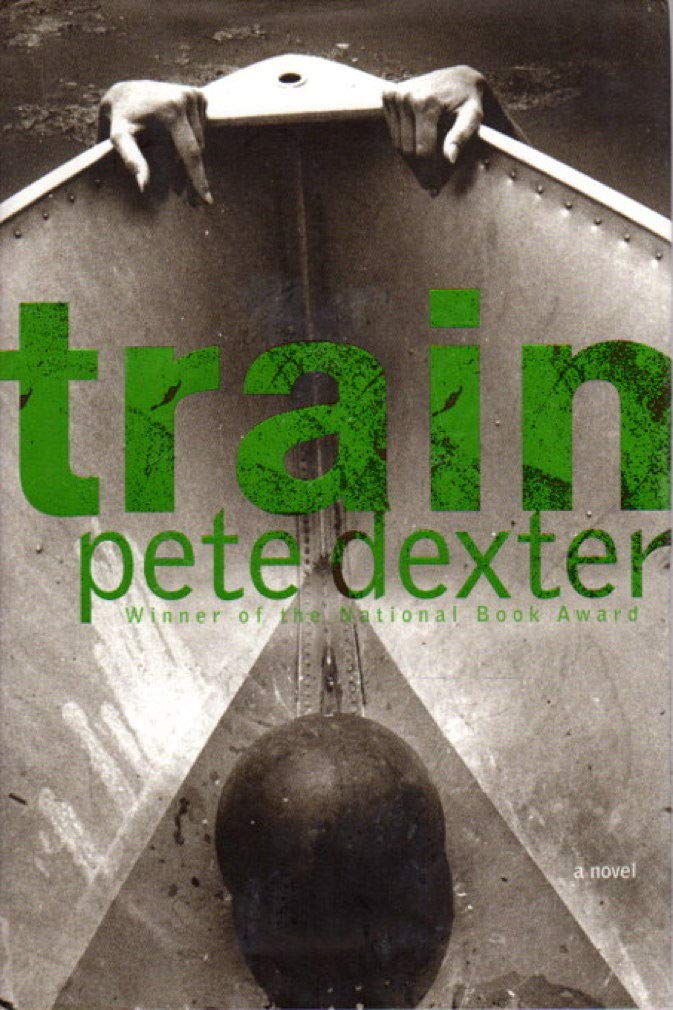
Train: A Novel
Train by Pete Dexter is an award-winning work.
Work Information
Train remains a work that continues to attract readers.
Train can be presented as an award-winning work by Pete Dexter.
Book Information
- Publisher
- Doubleday
- Published
- 2003-10-07
- Pages
- 288 pages
- Language
- 英語
- Size
- 16.21 x 2.51 x 24.18 cm
- ISBN-13
- 9780385505918
- ISBN-10
- 0385505914
- Price
- 5331 JPY
- Category
- 洋書/Literature & Fiction/Genre Fiction/Historical
Los Angeles, 1953. Lionel Walk is a young black caddy at Brookline, the oldest, most exclusive country club in the city, where he is known by the nickname “Train.” A troubled, keenly intelligent kid with no particular interest in his own prodigious talent for the game, he keeps his head down and his mouth shut as he navigates his way between the careless hostility of his “totes” and the explosive brutality of the other caddies. Miller Packard, a sergeant with the San Diego police department, first appears on the boy’s horizon as a distracted gambler, bored with ordinary risks. Train names him the “Mile-Away Man” as they walk off the first tee, and even months later, when they have become partners of a sort and are winning high-stakes matches against golf hustlers all over the country, the Mile-Away Man is a puzzle to Train, remote and intimate, impulsive and thoughtful, often all at the same time. Packard is also a puzzle to Norah Still, the beautiful lone survivor of a terrifying yacht hijacking, who is both aroused and repulsed by his violent and detached manner at the crime scene. Packard himself feels no such ambiguity. He is unequivocally drawn to Norah – and perhaps to what has happened to her – and an odd, volatile triangle takes shape, Packard pulling the other two relentlessly into deeper water, away from what is safe. With his trademark economy of style, Dexter brings these characters to life in their most reckless, vulnerable moments, stripping away words and manners until all that is left is the basic human pulse.
PETE DEXTER is the author of the National Book Award winner Paris Trout and of God’s Pocket , Deadwood, Brotherly Love , and The Paperboy. He was born in Michigan and raised in Georgia, Illinois, and eastern South Dakota. He lives in Puget Sound, Washington.
Reviews
-
Excellent.
Auteur découvert par hasard en passant d'un lien hypertexte à un autre, on finit par tomber sur des commentaires élogieux, des articles sur l'auteur (un sacré personnage) qui intriguent, puis des critiques journalistiques élogieuses, des prix littéraires qu'il ramasse. Qui est ce Pete Dexter? Alors pour 2 francs six sous on achète par curiosité le roman "Train". Et on tombe sur un style d'écriture incroyable. Bien sûr ça se passe dans les années 50, le racisme bat son plein. Mais Pete Dexter est un blanc, un ancien journaliste, il connaît son affaire, il est bien renseigné, et dénonce à sa façon tout cette violence raciale dans ces années d'opulence (pour les blancs) avec un humour coup de poing. D'ailleurs il semblerait que la baston, Pete Dexter la connaît très bien. Quel bonhomme! et quel talent!
-
Rassismus auf dem Golfplatz
Noch vor wenigen Jahrzehnten hätte auch ein Tiger Woods in den USA nur wenige Golfplätze als Spieler betreten dürfen. Pete Dexter läßt in seinem Kriminalroman "Train" die rassistische amerikanische Golferwelt in den 50iger Jahren des vorigen Jahrhunderts auferstehen. Grausamer Doppelmord und Vergewaltigung samt Verstümmelung auf einer Yacht; ein ebenfalls mordender Polizist, der im Weltkrieg nach dem Untergang seines Schiffes zu lange zwischen Haien und toten Kameraden im Pazifik herumtrieb; ein schwarzer Jugendlicher, der den Liebhaber seiner Mutter im Affekt erschlägt ... Lionel Walk, genannt "Train", ist ein stiller, ungemein sympathischer afroamerikanischer Junge, der als Caddie, später als Greenkeeper arbeitet und sich als Autodidakt nebenbei das Golfen beibringt. Der golfspielende Polizist Miller Packard entdeckt, daß Train ein Jahrhunderttalent ist. Er fördert ihn, nutzt ihn aber auch zu eigenem Vorteil aus... Ein mitunter harter, bisweilen brutaler Roman, der dennoch anrührt, ja: traurig stimmt. Zugleich gibt er kompetente Auskunft über das widerwärtige Herrenbewußtsein am Beispiel der damaligen Golferszene, das hoffentlich für alle Zeiten der Vergangenheit angehört.
-
Vibrant, thrilling, dark and dirty
In Train, Dexter gives us the Los Angeles milieu from the point of view of rich and poor alike. Linguistically adroit, this book uses the black vernacular without resorting to parody or even once overshooting its mark - it is a fabulous performance with moves as smooth and silky as double cream. It is that rare phenomenon a book that spans the gap between the races in the American hinterland, giving us both extremes and commonplaces with a rich dexterity of plotline, circumstance and feeling. This is the second of Dexter's books to win the American National Book Award. It is a violent book, opening on the yacht of a rich entrepreneur and two criminal clandestine boarders who have stumbled into a situation they cannot control. Some of the events plumb the depths of viscerality, perhaps too well for some readers. But if you're made of strong enough stuff - this is a superb read. Incredibly - it is partly about golf. We are in the early 1950s, long before black emancipation and the Reverend Martin Luther King. Train is a caddy working for a few dollars a day when he meets up with Miller Packard, a white cop with a penchant for finding trouble, and if he can't find it, he'll make it. They team up to fleece the gambling golfers of the era - but the setting is incidental and the events encompass a whole world - as vibrant and thrilling as it is dark and extremely dirty. A tremendous read, though there are no trains of a locomotive type in it, except for the express speed of the plot, which will leave you, I promise, figuratively gasping for breath.
-
praise, unalloyed
pete dexter's fictions have no label, no category, no genre beyond, maybe, 2d-half 20th-century americana. they are finely written in sturdy, bluff sentences that give a reader no place to hide from their blunt narrative marches, and you are never two steps beyond wondering if they are, indeed, fictions. i came aboard with "paris trout," an unflinching look at racism in the small town south that won praise and award and was a bad place to start. like some of cormac mccarthy, it took months to get over. dexter seems sometimes, before turning them loose, to fondle his plots, characters, scenes, sentences like lenny petting his mouse, and it is easy to be a reader petted this way this while he unleashes a story as crushing as tires on a shell driveway that leaves you whimpering in a corner of what you came in thinking was your america, a fine place to live. topics abound (not in order) -- philadelphia streetcorner-tough bon-bons "brotherly love" and "god's pocket," and "deadwood" (rollicking around with the wild west myth starring buffalo bill), "the paperboy," "spooner," "paper trails" (a memoirish account of dexter's affairs with newspapers), and "train." if there's any theme, it's race relations and the uneasiness of class in america, but that's too close to saying of this close observer, "hey, he writes sentences" to be called a theme. "train" puts you in 1950s southern california with perfect atmospherics, on golf courses populated by cads, caddies, high-rollers and rolled, those with fiber and those without, guys and their dolls, and a quartet of main players who, with and without motive, plain suck the sunny out of it. you will visit scenes you never wanted to and come back to say you enjoyed it, crying as in a chorus, "please mr. dexter, may i have another?"
-
Train
I have been a big fan of Pete Dexter's since first reading "The Paper Boy." Since then I have read all of his books and would say that I enjoyed "Brotherly Love" the most. I was very excited to come across "Train" recently and order the book as quick as I could. "Train" is an excellent book and Dexter stay closes to his signature style. I do however agree with some of the reviewers that the book loses momentum at the end. When I finished the the last page I fond myself whishing there were another 100 pages to go. Overall I enjoyed the book and would recommend reading any and all of Dexter's works.