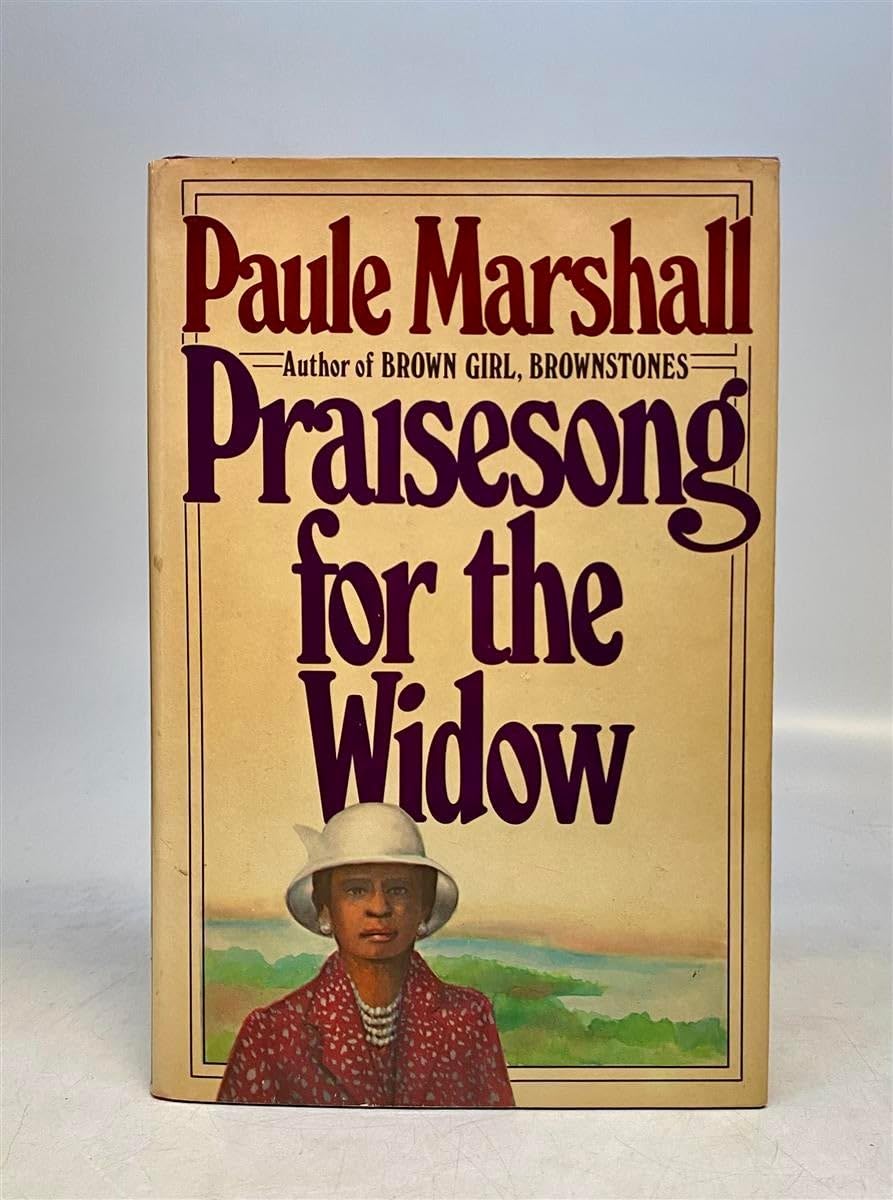
Praise-Song for the Widow
Avey Johnson, a widow, travels through the Caribbean and slowly reconnects with her past, her body, and her cultural memory. Ritual, song, and recollection become the means by which loss is confronted and identity is restored.
Work Information
Song and memory bring back the shape of a self that had been lost.
Paule Marshall’s novel explores Black womanhood, migration, and cultural belonging across the Caribbean and the United States.
Book Information
- Publisher
- Putnam Adult
- Published
- 1983-02-14
- Language
- 英語
- Size
- 50.8 x 50.8 x 50.8 cm
- ISBN-13
- 9780399127540
- ISBN-10
- 0399127542
- Price
- 19211 JPY
- Category
- 洋書/Literature & Fiction/Literary
While on her annual Caribbean cruise, Avey Johnson, a Black, middle-aged widow, finds her comfortable life unraveling and embarks on another voyage, an odyssey in search of spiritual and cultural regeneration
Reviews
-
One of the best books I own. I was first introduced to this book when I was in college and it took my breath away. The descriptions of different places and culture are beautiful. The internal battle faced by the protagonist is detailed extremelt well. Marshall is a phenomenal writer and always had been.
-
i ordered this book as it mentions the island of carriacou. I was going to the island to celebrate my 50th birthday. read the book whilst i was there. good read. shame the book is now falling apart.
-
Praisesong for the Widow by Paule Marshall is a book that captivated me over three decades ago when it was first published. I reread it and I feel the same way I felt when I read it for the first time. There are so many memorable lines, quotes and lessons that I have rehearsed over the years. Avey Johnson is a middle-aged, African American woman who has lost her precious husband, Jay (Jerome) Johnson. She is on a cruise with friends when she suddenly feels drawn to quit the vacation and return home much to her friends’ dismay. Her Aunt Cuney keeps coming to her in dreams and seems battle hander and pull on her. She ends up leaving the ship and is left on the island of Grenada with a 24 hour wait before she can fly back to New York. She wrestles with her restlessness and walks down the beach until she is lost. She encounters Lebert Joseph, an older man who insists she come to an annual event called The Excursion. She goes through a catharsis and a soul cleansing. She realizes that she her husband had acquired things but they had lost the simple everyday laughter and love along the way. Read this thought-provoking book that will have you sitting on the edge of your seat as Avey puts the puzzle pieces together and gets back in touch with her true self.
-
I haven't read the book yet, but it's in new condition.
-
A widow for four years, Avey Johnson has stanchly held herself up, living in the suburbs of New York City, lonely and adrift yet mostly conforming to the expectations of her friends, associates, and three daughters. While on a cruise in the Caribbean, however, she is troubled first by a dream and then by a comprehension of the vacuity of the experience (not to mention the insistent demands of her friends to have fun, damn it), including an epiphany of sort when confronted by a peach parfait in the artificial environs of the appropriately named Versailles Room. To the angry dismay of her farcically domineering friends, she leaves the ship for good at the port of the next island, fully expecting and intending to take the next plane back to New York. But her moment of resolution leads to an emotional collapse, and in Grenada her adventures (and misadventures) truly begin. Marshall intersperses flashbacks from Avey's marriage and memories from her childhood with scenes from her impulsive flight to Grenada and her equally spontaneous escape with a group of complete strangers to the offshore island of Carriacou. What becomes apparent to the reader, as well as to Avey, is that she has lost touch with who she is and where she came from: not only with her South Carolina roots and her days as a young adult in Harlem and on Halsey Street in Brooklyn, but also with the African heritage that her aunt had often urged on her as a child. It is not simply that she has become "too white" but rather that the process of assimilation into an unquestioning and comfortable suburban life has made her not much of anything at all. There is a certain pedantic quality to Marshall's prose, a sporadic appeal to heavy-handed symbolism that turns the book's themes into a capitalized Message: don't abandon your roots. But the intricate portrait of Avey Johnson largely dispels the thought that Marshall is simply preaching; this is indeed a praisesong for a widow rather than a sermon for readers. In fact, if I were to choose one word to summarize Marshall's prose here it would be "visceral." The language she uses to describe Avey Johnson's collapse and reawakening is both guttural and painstaking; the reader is not simply an observer of her trepidation, mortification, and confusion but also a participant in the blank nightmare her life has become. (I can't imagine the reader that won't be squeamishly horrified when Avey's emotional troubles turn physical.) While the final destination of Avey Johnson's late-life voyage is no surprise, the path she takes to get there is both excruciating and inspiring.
Related Literary Awards
- American Book Awards Edition 5 (1984) ・Winner