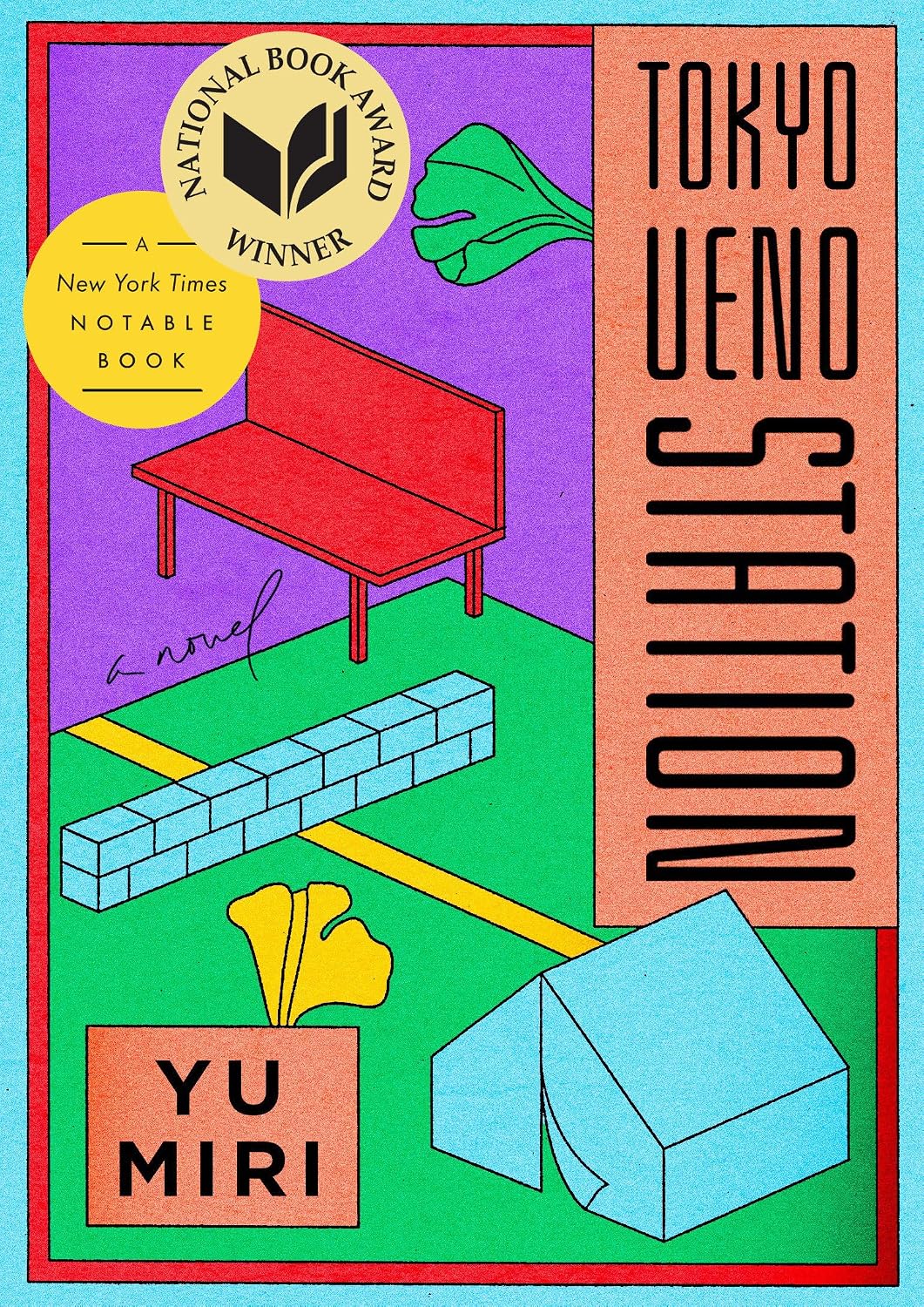
National Book Award for Translated Literature
Tokyo Ueno Station (National Book Award Winner): A Novel
Kazu, a laborer born in Soma, Fukushima, comes to Tokyo before the Olympics, works around Ueno, and eventually lives on the margins of Ueno Park. Through the memories of his ghost wandering the station and the park, the novel quietly layers family loss, poverty, disaster, the imperial system, and the shadows cast by urban prosperity.
Work Information
The voice of one dead man left amid the crowds of Ueno Station illuminates postwar Japan and its unseen poverty.
Tokyo Ueno Station is a short novel narrated through the voice of Kazu, a dead man wandering Ueno Park. Japan's period of rapid growth, the Tokyo Olympics, migrant labor, family deaths, and memories after the Great East Japan Earthquake intersect with overheard conversations in the station and park, illuminating lives that have fallen away from the city's bright surface. Yu Miri portrays those pushed to society's margins without reducing them to sentiment, layering personal pain with the history embedded in a place.
Review Summaries
-
The lyrical, fragmentary narration is praised for tying personal history to national history. Its early abstraction may demand patience, but as separation from family and the path into poverty come into view, the novel gains emotional force and focus.
-
The quiet, meditative prose supports a structure that moves between Ueno Park in the present and the protagonist's past. The lasting impression is one of sympathy for a man pushed out of society and pain over connections lost too late.
-
The novel is read as preserving the ambiguity of a ghost story while exposing the divide between rich and poor and the indifference of the city. Its poetic gaps and layered memories create an aftereffect that exceeds a straightforward social novel.
Book Information
- Publisher
- Riverhead Books
- Published
- 2020-06-23
- Pages
- 192 pages
- Language
- 英語
- Size
- 13.16 x 1.83 x 18.47 cm
- ISBN-13
- 9780593088029
- ISBN-10
- 0593088026
- Price
- 5369 JPY
- Category
- 洋書/Literature & Fiction/Genre Fiction/Horror/Ghosts
WINNER OF THE 2020 NATIONAL BOOK AWARD IN TRANSLATED LITERATURE A NEW YORK TIMES NOTABLE BOOK OF THE YEAR A surreal, devastating story of a homeless ghost who haunts one of Tokyo's busiest train stations. Kazu is dead. Born in Fukushima in 1933, the same year as the Japanese Emperor, his life is tied by a series of coincidences to the Imperial family and has been shaped at every turn by modern Japanese history. But his life story is also marked by bad luck, and now, in death, he is unable to rest, doomed to haunt the park near Ueno Station in Tokyo. Kazu's life in the city began and ended in that park; he arrived there to work as a laborer in the preparations for the 1964 Tokyo Olympics and ended his days living in the vast homeless village in the park, traumatized by the destruction of the 2011 tsunami and shattered by the announcement of the 2020 Olympics. Through Kazu's eyes, we see daily life in Tokyo buzz around him and learn the intimate details of his personal story, how loss and society's inequalities and constrictions spiraled towards this ghostly fate, with moments of beauty and grace just out of reach. A powerful masterwork from one of Japan's most brilliant outsider writers, Tokyo Ueno Station is a book for our times and a look into a marginalized existence in a shiny global megapolis.
A Japanese author of Korean descent, Yu Miri is a writer of plays, prose fiction, and essays, with over twenty books to her name. She received Japan's most prestigious literary award, the Akutagawa, and her novel Tokyo Ueno Station won the 2020 National Book Award for Translated Literature. After the earthquake and tsunami in Fukushima, she relocated there and has opened a bookstore and theatre space. Morgan Giles is a Japanese translator and reviewer. She lives in London.
Reviews
-
A Somber, Thought-provoking Read
I previewed the first couple of pages and was instantly hooked. The writing draws you into a very real, impactful story that leaves you with thoughts of home and family; of gratitude for the things and the people in your life.
-
生きる事の意味を、生活と歴史の中で問い直した、重たい一冊。 英訳でも読み応えがありました。
英訳版が全米図書賞を受賞したと言うので、その理由を知りたくて読んで見た。 思わず音読してしまった程、心に沁みとおる英文なのだ。その点では、日本語版より訴えかける力が強いと思う。良い訳者に出会えた事が、本作品に全米図書賞をもたらした事は否めないだろう。 同時に、英訳版でも心に沁みとおると言うことは、作品で描かれる場所や時代を超える普遍性を本作品が持っていると言うことになるのだろう。 「疲れていない時はなかった。人生に追われて生きていた時も、人生から逃れて生きてしまった時も――――――。はっきりと終わることなく、ただ生きていた気がする。でも、終わった。」。本作品の原文(日本語版)の一節である。主人公の一生涯が、端的に示されている。国境を越え、言語を超え、普遍的に問われ続ける主題だ。 そして、福島県浜通りの寒村の貧農、出稼ぎ、高度成長、ホームレス、天皇制、様々な問題が、エピソードとして絡まりながら展開して行く。主人公の生涯を綴るには不可欠の素材だが、米国人に理解できるかと言えば疑問だ。 主人公も、出稼ぎを続けながら、家庭を持ち、子供を育て上げ、60歳で出稼ぎ生活を終え、妻と娘から、仙台で一番の百貨店で買った還暦祝いの腕時計を貰う所まで来たのだ。高度成長のオコボレを細やかながらも得て幸せな老後に入ろうとしていたのだ。息子と妻の死がなければと、言うことも出来るだろう。息子と妻の死があったとしても、家を出て、孤独なホームレス生活に入る必然性は無い。 リアルに見えながら、実際には存在しえない人物と、その生活を描きながら、やはりその時代にその場所に確かに存在したであろう一つの生涯、この部分があるからこそ米国人の共感を呼ぶことが出来たのかもしれない。
-
Excellent
A unique and affecting novel about poverty, gentrification and family ties. The last 15 pages moved me to tears. Recommended.
-
Not overwhelming
I was interested by the subject, but wasn't overwhelmed by the story. There's no real plot and it just rambles along until the end, which is rather inconclusive. I does manage to convey some historical information about Tokyo and Japan.
-
Un Giappone insolito
Un romanzo originale, realistico, crudo ma mai volgare
-
sem teto em Tokyo
Muito bem escrito, o livro narra a vida sem teto e a trajetória do personagem até atingir esta condição. Diferente.
-
A fantastic insight to the relationship of disaster and person!
This was a required book for one of my literature classes and I believe my professor made an excellent choice. This novel discusses the impacts of disaster on modern Japan and the way different people remain ignorant to the experience of others. I’m not sure what the original Japanese version is like, but the English is easy to read and provides details I would have never expected out of a first person novel. If you like understanding the hardships of others through fiction, I believe this one allows for readers to begin to understand the difficulties of homelessness not only in Japan, but elsewhere too. It reminded me deeply of a homeless encampment near my current home that gets driven away when politicians visit.
-
Excellent and Heartbreaking
This was a quick read with an interesting premise, the translation is great and captures the spirit of the story well.