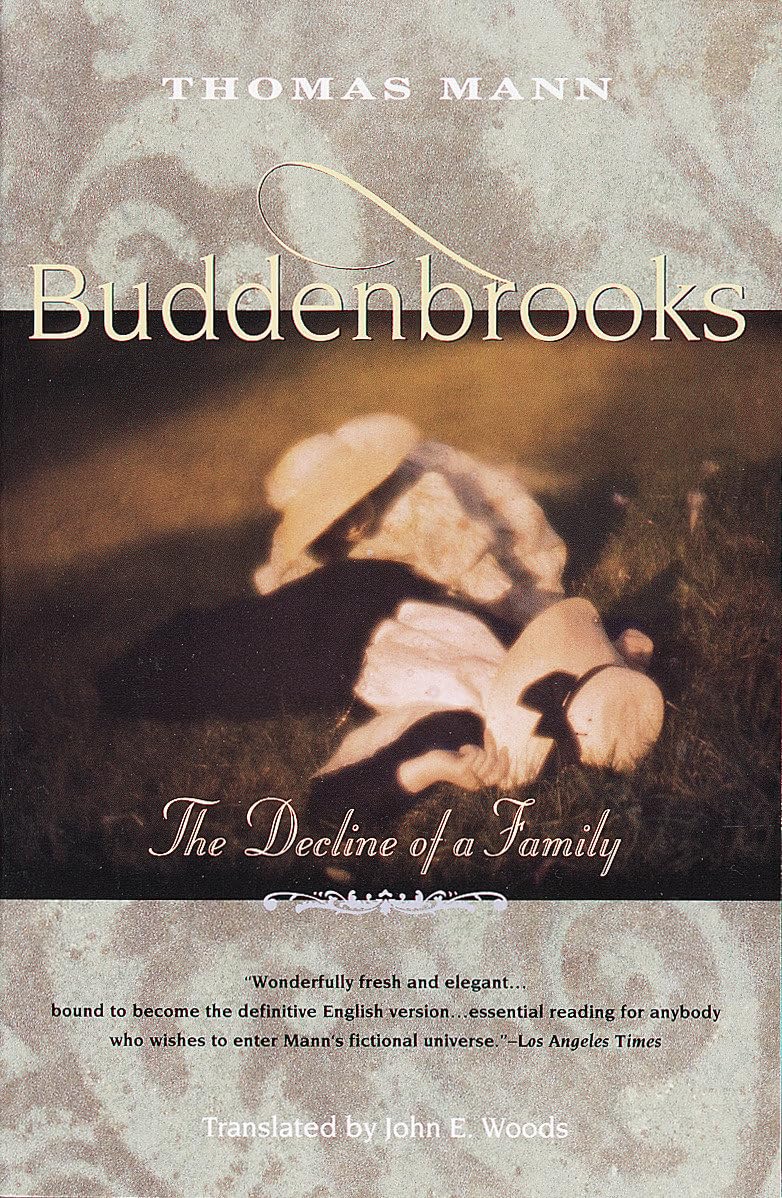
Buddenbrooks: The Decline of a Family (Vintage International)
A family chronicle that traces the generations of the Buddenbrook merchant family in northern Germany, portraying prosperity, decline, individual fate, and social change. It is a representative work for its precise depiction of time and changing values across generations.
Work Information
What begins as a story of prosperity becomes one of quiet collapse.
Following four generations of the Buddenbrook family in Lübeck, the novel charts a family history from prosperity to quiet decline. It precisely captures values that cannot be sustained by economic success alone and the changes driven by modernity.
Book Information
- Publisher
- Vintage
- Published
- 1994-06-28
- Pages
- 736 pages
- Language
- 英語
- Size
- 13.1 x 3.2 x 20.2 cm
- ISBN-13
- 9780679752608
- ISBN-10
- 0679752609
- Price
- 4057 JPY
- Category
- 洋書/Literature & Fiction/Genre Fiction/Historical
A Major Literary Event: a brilliant new translation of Thomas Mann's first great novel, one of the two for which he was awarded the Nobel Prize in literature in 1929. Buddenbrooks, first published in Germany in 1900, when Mann was only twenty-five, has become a classic of modem literature -- the story of four generations of a wealthy bourgeois family in northern Germany. With consummate skill, Mann draws a rounded picture of middle-class life: births and christenings; marriages, divorces, and deaths; successes and failures. These commonplace occurrences, intrinsically the same, vary slightly as they recur in each succeeding generation. Yet as the Buddenbrooks family eventually succumbs to the seductions of modernity -- seductions that are at variance with its own traditions -- its downfall becomes certain. In immensity of scope, richness of detail, and fullness of humanity, Buddenbrooks surpasses all other modem family chronicles; it has, indeed, proved a model for most of them. Judged as the greatest of Mann's novels by some critics, it is ranked as among the greatest by all. Thomas Mann was awarded the Nobel Prize for literature in 1929.
John E. Woods is the distinguished translator of many books -- most notably Arno Schmidt's Evening Edged in Gold, for which he won both the American Book Award for translation and the PEN Translation Prize; Patrick Suskind's Perfume, for which he again won the PEN Translation Prize in 1987; Mr. Suskind's The Pigeon and Mr. Summer's Story; Doris Dorrie's Love, Pain, and the Whole Damn Thing and What Do You Want from Me?; and Libuse Monikova's The Facade. Mr. Woods lives in San Diego and is currently at work on a translation of Thomas Mann's The Magic Mountain.
Reviews
-
優れた英訳のように思われる
いろいろと教えられる英訳です。 »ist es wahr, daß ein Ei soviel wert ist wie ein Viertelpfund Fleisch?«を"is it true that an egg is as nutritious as a quarter-pound of meat?"と訳している。日本語訳にはnutritious の意味合いを含んだ翻訳がない。 最近になって英訳と対照したので、どのくらいこのような個所があるのか知らないが、教えられるところの多い翻訳になりそうです。凝った英訳になっていませんので、皆さんも参照してしてみてはいかがでしょうか。
-
見事な翻訳
ドイツ語原本を読む際私の理解が正しいかチェックするために英訳を購入しました。そこで翻訳者John E. Woods の正確でしかも美しい訳に出会いました。私にとっては新鮮な驚きでした。
-
ドイツ語を習ひたくなつた
Part10で当主のThomasが突然死し、邸は人手に渡り、これで壮大な挽歌を奏でて終はりかな、と思ひきや、Part11Chapter2に入ると、一人息子のHannoことJohannの、寝坊から始まる一日の学校生活が語られます。 なぜこの大詰めを迎へて、15歳の少年が、ラテン語の宿題を怠けて教師の指名に懼れをののく姿に焦点を当てるのでせう? まるでこれから青春小説が始まるかのやうです。おつかない教師、卑屈な教師、ガリ勉の級友、アンチョコをのぞく級友等々が織りなす、宗教やらラテン語やらの授業風景。学校が引け、唯一の友人Kaiに吐露する前途への悲観。そして帰宅し夕食の後、音楽に慰めを見出し眠りに就くまで。小さなドラマはあるけれども、まあ平凡といつていい一日を、Mannは一章丸々割いて、真面目な顔つきで皮肉をいふスタイルで、丹念に克明に再現し、”This was one day in the life of little Johann”と締めくくります。 4代にわたるブルジョワ一家の崩壊のドラマを終へようとする時、かういふ脇道に入つて、私は随分面食らつたのですが、続く最後の2章を読めば、作者のちと才気走つた、技巧的な狙ひは了解されます。 人生の本質は破滅と死にあるといふ、身も蓋もない感懐を表現するためには、Thomasの死を描くだけでは足りないので、悲劇のダメ押しの如きかういふ結末をMannはおいたのでせう。その意図に異議はありませんが、しかし私は、小説を読み終へてこんなに哀れな思ひに誘はれたことは初めてです。いくらなんでもあんまりな、気の毒な、といふ感想すら浮かびました。それほど私はこの作の人物に入れ込んでしまつたのです。これからも忘れられぬ小説となるでせう。 John E. Woods氏の英訳にはThe Magic Mountain, Doctor Faustus, Joseph and His Brothersがあり、Kindleでは今のところThe Magic MountainとBuddenbrooksが手に入ります。Mannの大長編はペーパーバックといへども嵩張りますから、字を拡大でき、内蔵辞書も実に重宝するKindleに、残りの2作を入れてもらひたいものです。※註:アマゾンさんは遠慮なく違ふ版にレビューを転載するので、ご注意ください。私が書いたのは「John E. Woods氏による英訳のkindle版」です。
-
A mess
It's filled with typos and bad translations. Don't get this version.
-
Lowe-Porterよる翻訳です
他の方のレビューを見て勘違いして購入しましたが、こちらは、Woodsによる新訳ではなく、Lowe-Porterの旧訳の方です。出版年もこちらの方が新しく表示されていたので、新訳であるものと思ってしまいました。新訳がドイツ語の原文の構文をできるだけ英語に反映させようと努めているのに対して、旧訳は、かなり自由に訳しています。また、旧訳は、方言の理解がかなり不十分であると批判されてきたものらしく、実際、やはりその批判は的を射ているのだろうという印象を受けます。これだけ手の込んだ長大な作品を誤訳なしに訳すことは、ほとんど不可能だろうと思いますが、かなり多くの誤訳が含まれているという一般的な評価も購入後に知りました。Lowe-Porter訳は、英語圏でこの作品を最初に広く紹介した訳ということで、英語圏でのこの作品の受容を理解するうえで歴史的な価値はあると思いますが、ドイツ語を勉強するのであれば、Woods訳の方が役に立ちそうです。ちなみに、Lowe-Porter訳と私が読んだ日本語訳を読み比べると、作品の最後の一文の解釈も逆になっています。Woods訳でどう訳されているのか、また、どちらの解釈が正しいのかは知りませんが。
-
Buddenbrooks may look and sound to the prespective reader like a massive challenge, but Thomas Mann's first novel, published when he was 25, is remarkable for many things and not least of these is the ease with which it can be read. Opening in 1835, it charts the lives of the Buddenbrooks through some 40 years, following the decline of this successful Hanseatic family. But Mann's magnum opus - it was cited on his 1929 Nobel Prize for Literature - is more than that: what it presents is a detailed and complex social view of a changing Germany, particularly taking in the turbulence of the revolutionary period around 1848 to the years after unification under Bismarck in 1871. From a position of social and economic authority, the Buddenbrooks' confidence and power is overtaken by events around them until they are, finally, reduced to an insignificant echo of a former age. Their inability to move with the times, even though they are not incapable of seeing the changes around them, renders them impotent in the face of passing history. The only Buddenbrook who survives is Antonie... not because of her flexibility however, but precisely because her childlike petulance and unquestioning faith in the status quo allows her to maintain her arrogant assumptions about the social position of the family and, therefore, her own role within it. And yet this belligerent refusal to move forward is a major factor in the family's decline. Buddenbrooks also works so well because of Mann's dispassionate portrayal of his characters and their disappearing world. His gentle irony, particularly in terms of dealing with religion, provides the reader with a constant intellectual challenge. And, while it was first published in 1901, this is a book that never feels dated. A little knowledge of 19th century German history helps, but is not essential to enjoying this absolutely superb novel.
-
i bought this version on kindle because the price is negligible. Unfortunately, so is the translation, whoever GP translators are. If you want to enjoy this marvellous book in English, then go for a the really good translation that is also available.
-
impossible de lire ce livre tant la traduction est mauvaise. totalement incompréhensible
-
Um livro excepcional. Se você não lê em alemão, mas lê em inglês, aproveite, já que a tradução é primorosa.
-
Great