Newbery Medal (John Newbery Medal)
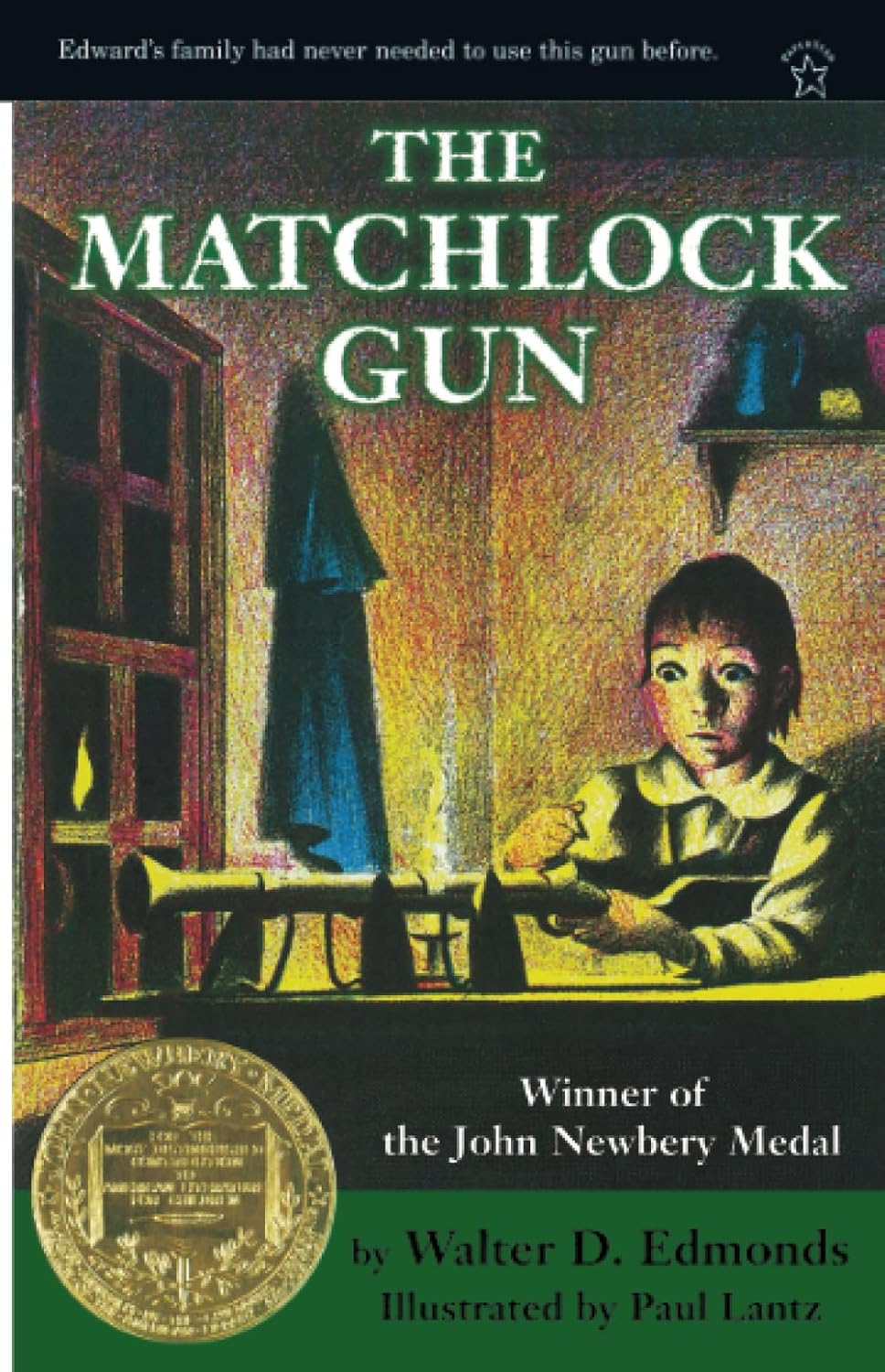
The Matchlock Gun
Set in colonial New York in 1756, the novel follows a boy and his mother as they try to protect their home while the father is away. Against the backdrop of an historical episode, it compresses family ingenuity and tension into a compact narrative.
Work Information
One gun stands between the family and danger.
Seen through the boy Brom’s eyes, the book tells the story of one night in which a family takes up a gun to defend itself. Within a short page count, it brings frontier tension and shared family resolve vividly to the surface.
Book Information
- Publisher
- Penguin Young Readers Group
- Published
- 1998-11-23
- Pages
- 80 pages
- Language
- 英語
- Size
- 12.4 x 0.6 x 19.7 cm
- ISBN-13
- 9780698116801
- ISBN-10
- 9780698116801
- Price
- 1577 JPY
- Category
- 洋書/Children's Books/Literature & Fiction/Historical Fiction/United States/Colonial
A Newbery Medal Winner In 1756, New York State was still a British colony, and the French and the Indians were constant threats to Edward and his family. When his father was called away to watch for a raid from the north, only Edward was left to protect Mama and little Trudy. His father had shown him how to use the huge matchlock gun, an old Spanish gun that was twice as long as he was, but would Edward be able to handle it if trouble actually came? This classic, first published in 1941, has an updated, kid-friendly format that includes the original black-and-white illustrations.
Walter D. Edmonds was born in 1903 in New York state. His 1936 novel, Drums Along the Mohawk , was a bestseller for two years. His later works received major literary awards, including the National Book Award and the Newbery Medal. He died in 1998.
Reviews
-
A Great story for young boys! A Good find for a used book!
We ordered this book as a Christmas gift for our son. He really enjoyed the story. The book was used but in very good condition as a former library book. I really prefer these older books. It's more about the story rather than a shiny brand new book. This has stood the test of several generations of young readers since it was published 80 years ago! This book was recommended by Amazon after we searched "Banner in the Sky"...another classic story published in 1954 for young readers. Thanks for a great Christmas present.
-
Another great book by Clyde Bulla!
I bought this book after reading the Ghost on Windy Hill which was an amazing ghost story! I read The Matchlock Gun with my kids and we all thoroughly enjoyed it! Contrary to what I expected, the story was not weighed down at all by its historical setting. I highly recommend this book and author!
-
True story
True story, historically detailed and accurate, excellent book for any kids interested in the French and Indian war era.
-
On booklist and grandson enjoyed
Bought for grandson and he sat down and read.
-
Refreshingly Honest Historic Fiction
The Matchock Gun is a short story that distills in a few pages what life was like in the Hudson Valley during decades of war between the settlers of that valley and the French Canadians and their Indian allies to the north. It was written by an authority on the region and its history, the same author who wrote Guns Along the Mohawk, which was made into a movie. Any short story written for children has its limitations, but the critics of this one seem to focus on its portrayal, or lack of detailed portrayal, of Indians and slaves in this time period. If the Indians are shown as being vicious it is because they are trying to kill a woman and two children, not because they are Indians. The murder of women and children should be shown as evil and clearly called what it is. And this type of attack happened all across this and other frontiers for centuries. Those who criticize this book need to read some of the diaries of the settlers who witnessed and lost family these attacks. As for slaves, they are mentioned only in passing because they were simply part of the world in which these children grew up in. The children in the story do not condone or glorify slavery in the British colonies and neither does the author. Some criticize the age in which this book was written ( the 1940s) as being backward, but it is our own overly sensitive, quick-to -take -offense generation that refuses to look at life as it is, preferring to see only what is pleasant even at the expense of truth.