Baillie Gifford Prize for Non-Fiction
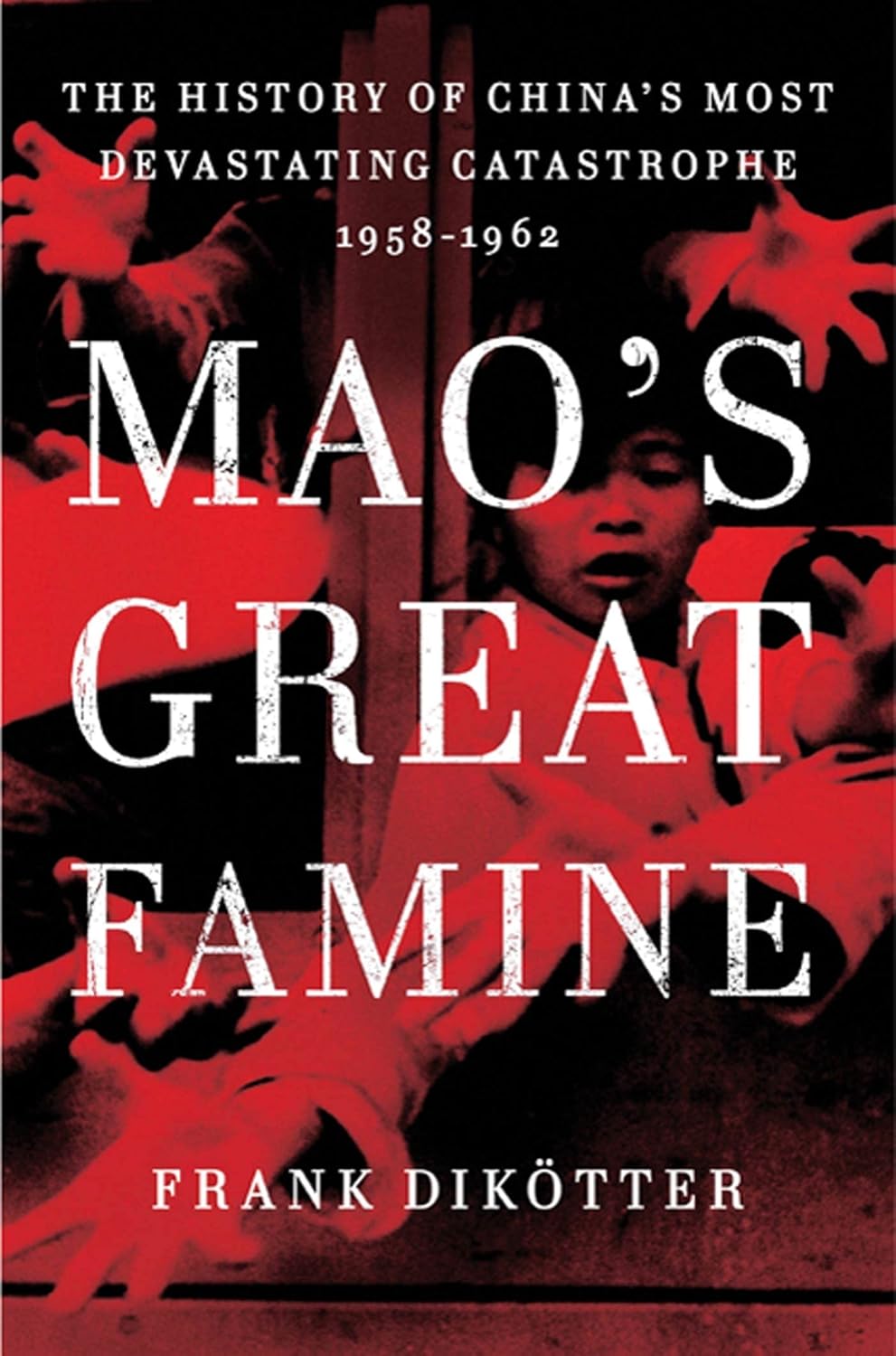
Mao's Great Famine: The History of China's Most Devastating Catastrophe, 1958-1962
A historical study that reexamines the Great Chinese Famine of 1958 to 1962 and traces how policy, bureaucracy, and information control produced mass death.
Work Information
A definitive archival study of Mao-era famine.
Based on primary sources, the book lays out the scale of the famine and the chain of responsibility behind it.
Book Information
- Publisher
- Walker & Co
- Published
- 2010-09-28
- Pages
- 420 pages
- Language
- 英語
- Size
- 16.23 x 4.06 x 24.28 cm
- ISBN-13
- 9780802777683
- ISBN-10
- 0802777686
- Price
- 5200 JPY
- Category
- 洋書/History/Asia/China
An unprecedented, groundbreaking history of China's Great Famine that recasts the era of Mao Zedong and the history of the People's Republic of China. "Between 1958 and 1962, China descended into hell. Mao Zedong threw his country into a frenzy with the Great Leap Forward, an attempt to catch up to and overtake Britain in less than 15 years The experiment ended in the greatest catastrophe the country had ever known, destroying tens of millions of lives." So opens Frank Dikötter's riveting, magnificently detailed chronicle of an era in Chinese history much speculated about but never before fully documented because access to Communist Party archives has long been restricted to all but the most trusted historians. A new archive law has opened up thousands of central and provincial documents that "fundamentally change the way one can study the Maoist era." Dikötter makes clear, as nobody has before, that far from being the program that would lift the country among the world's superpowers and prove the power of Communism, as Mao imagined, the Great Leap Forward transformed the country in the other direction. It became the site not only of "one of the most deadly mass killings of human history,"--at least 45 million people were worked, starved, or beaten to death--but also of "the greatest demolition of real estate in human history," as up to one-third of all housing was turned into rubble). The experiment was a catastrophe for the natural world as well, as the land was savaged in the maniacal pursuit of steel and other industrial accomplishments. In a powerful meshing of exhaustive research in Chinese archives and narrative drive, Dikötter for the first time links up what happened in the corridors of power-the vicious backstabbing and bullying tactics that took place among party leaders-with the everyday experiences of ordinary people, giving voice to the dead and disenfranchised. His magisterial account recasts the history of the People's Republic of China.
Frank Dikötter is Chair Professor of Humanities at the University of Hong Kong and Professor of the Modern History of China at the School of Oriental and African Studies, University of London. He is a key proponent of studying the history of China in global perspective, and has published a series of innovative books, from his classic The Discourse of Race in Modern China (Univ. Stanford Press 1992) to the controversial Narcotic Culture: A History of Drugs in China (Univ. Chicago Press 2004). He lives in Hong Kong. Frank Dikotter is chair professor of humanities at the University of Hong Kong and professor of the modern history of China on leave from the School of Oriental and African Studies, University of London. He has pioneered the use of archival sources and published seven books that have changed the way historians view modern China, from the classic The Discourse of Race in Modern China to his latest book, The Age of Openness: China before Mao. Dikotter is married and lives in Hong Kong.
Reviews
-
世紀の愚策、中国「大躍進運動」の悲惨な全貌
「大躍進運動」1958-62については精神主義に凝り固まった毛沢東が主導し、スズメを一掃して害虫を跋扈させたり、ド素人の国民に鉄鋼生産を強いて、結果、役立たずのくず鉄を大量生産し、国民をいたずらに疲弊させたおバカな政策として、計画経済や個人崇拝特有の「おバカさ」に焦点が当てられてこれまで紹介されてきたように思われる。ところが本書は膨大な労力と執念をもって、この運動がもたらした悲惨な結果、特に飢餓状況を余すところなく明らかにした傑出したドキュメンタリーである。この世紀の愚策は国民を無慈悲に飢餓と死に追いやった。毛沢東の夢想により、周りの追従により進められる集団農場化、嘘ばかりの生産増とスローガン、自然破壊、飢餓輸出、等々、すべて国民を飢餓に至らしめた。著者の執拗な事実の追及には脱帽以外ない。また、この桁外れの人道的犯罪行為である「大躍進運動」が更なる災害である文化大革命を生む経緯も納得させられた。また、読みやすい英語で書かれている。中国人にも一読をお勧めしたいが、本書は中国では禁書?危険か??
-
Bueno
Interesante
-
Very
Very Informative
-
Verified purchase
Great book with excellent details! This book reminds me of someone who took me in as an orphan child during The Great Chinese Famine but she didn’t survived before the starvation was over. She was blind and no family during the starvation. She lost her husband and four sons during the period of social movements and the land reform.
-
A remarkable book
I was always curious to read about the time of Mao, and the controversial statements about him and his one party system. This book clarifies with precise documents the very dark age of "Great Leap Forward" . I managed to find perfect answers all my question about this period. This magnificent work of Professor Dikötter is an utterly must to read.
-
Approfondito e interessante
un ottimo libro su uno dei più gravi crimini di Mao Tse-tung: l'aver provocato per motivi di politica interna relativi al suo ruolo all'interno del Partito Comunista Cinese, una delle peggiori carestie della storia cinese. Il folle "Balzo in avanti", provocò nel corso di tre anni tra i venti e i trenta milioni di morte per fame. Estremamente documentato il testo spiega molto bene cosa sia successo in Cina alla fine degli anni '50 dello scorso secolo. Lettura obbligata per tutti coloro interessati alla storia cinese moderna ma, soprattutto, per quanti ancora oggi si ostinano a incensare il "Grande Timoniere".