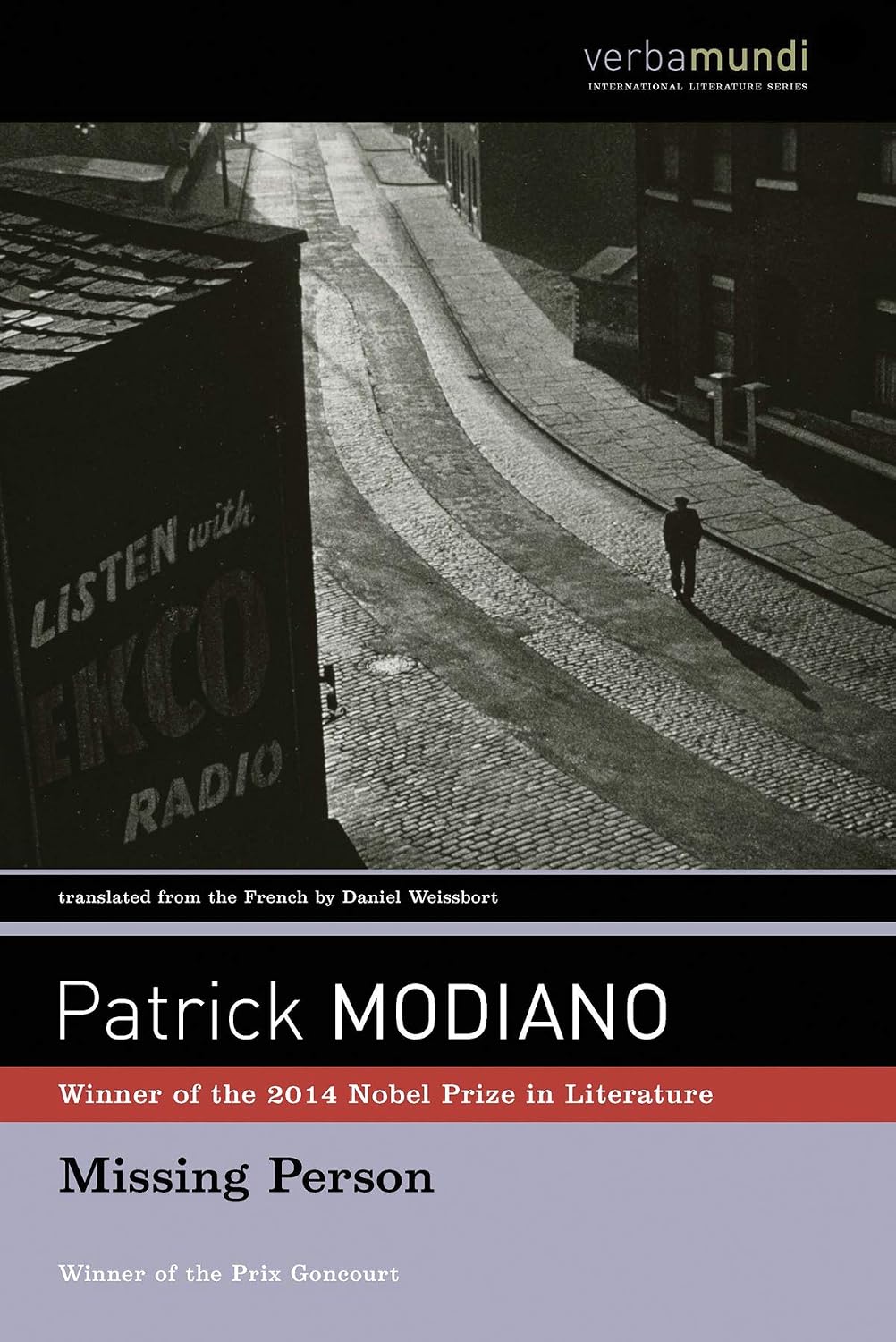
Missing Person (Verba Mundi Book)
A man with amnesia wanders through Paris in search of the person he used to be. Absence, identity, and the search for self unfold as a quiet suspense novel.
Work Information
Tracing a vanished memory brings other lives and pasts into view.
Known in Japanese as Kurai Butikku-dori, the novel uses the form of a detective story to explore memory and the outlines of existence.
Book Information
- Publisher
- David R Godine Pub
- Published
- 2004-11-30
- Pages
- 168 pages
- Language
- 英語
- Size
- 14.12 x 1.19 x 21.03 cm
- ISBN-13
- 9781567922813
- ISBN-10
- 1567922813
- Price
- 1255 JPY
- Category
- 洋書/Literature & Fiction/Genre Fiction/Action & Adventure
An intoxicating noir masterpiece from the winner of the Nobel Prize in Literature. One man hunts for his lost identity in this combination of psychological suspense and literary elegance. Missing Person crafts an unforgettable journey into the heart of memory, loss, and the fictions we live. Guy Roland has lived for a decade without a past. His current self was crafted by his employer, Hutte, who originally met Guy as a client before welcoming him into his detective agency. Set against the backdrop of 1950s Paris, Modiano pulls the reader into a world where identity is always just out of reach.
Patrick Modiano was awarded the 2014 Nobel Prize in Literature for a body of work that includes Missing Person and Honeymoon (both published by Godine). Daniel Weissbort was born in London and educated at Cambridge, where he was a History Exhibitioner. In addition to his translations, Weissbort published many collections of his own poetry, co-edited a historical reader in translation theory, and wrote a book about the translator Ted Hughes.
Reviews
-
ぐいぐい引き込まれる
謎ときの面白さプラス、不思議な感覚の小説です。英語も優しく、没頭できます。おすすめです。
-
It was a great plot to follow the whole story. It was very sad to find out how the character's memory was lost and revived. But I enjoy the whole story.
-
This was the first Patrick Modiano book that I'd read and I was hooked from page 1. The book follows the quest of a one time private detective, to try and find his own past and to discover who he really is. Set in Paris, the book takes the reader on a journey through time and through the Parisian suburbs of the 1940 - 60 period. A fantastic read, that I found hard to put down. Although I fully accept that this book will not appeal to everyone, if you do read it I am sure you won't be dissapointed. Patrick Modiano is a French writer whos books are hard to find in translation, but, well worth the effort.
-
This is the story of a man who is searching for his identity, and remembering more and more about his past as he follows his leads and unravels the stories of the people he once knew. It’s dreamlike in some ways and incorporates his imaginings of which of the characters he might turn out to be. Translated from the French, but retains the poetic turn of phrase of the original.
-
Patrick Modiano, as you may recall, was the most recent Nobel Prize winner (2014), though what that means, if anything, is hard to say. It is difficult for me to go into a book whose author is a Nobel winner without half-formed, amorphous ideas about what kind of quality that should represent--for myself (even though I shouldn't), I can't help but think of the Nobel as the acme of awards, and therefore have expectations about any particular example of the author's work that are unrealistic. Basically, I'm expecting to have my socks knocked off--though I doubt I can even describe what that kind of book would look like. MISSING PERSON is good--I liked it, though my socks were still snuggled against my feet when I was through. However, it is one of those persnickety books--once finished, it hangs around like dream fragments in the morning. Probably the two highest compliments that I can pay it is that I would like to read some more of Mr. Modiano, and that at some point, I'd like to read MISSING PERSON again. Although the two books share no details in common except the nationality of their authors and a certain tone, I'm reminded of another recent Nobel winner, J.M.G. Le Clezio, whose The Prospector also had a dreamy feel to it. Though 'unresolved' may be an accurate way to describe them both, neither felt incomplete, though readers who dislike loose ends might be disappointed. MISSING PERSON is the story of a man whose quest to regain the memory of his past takes him from one end of Paris to the other, teasing out connections and associations, slowly building a picture of his time in occupied France. Eventually, from the evidence he uncovers, and bits of his own memories that return, a semblance of a narrative appears, but it is far from complete by the book's end--nagging questions remain. It seems no great stretch to think that MISSING PERSON, originally written in 1978, could have been Mr. Modiano's attempt at an allegory for France itself--that the country suffered from amnesia when it came to Vichy France. Whether or not it is an effective allegory, I can't say, not being familiar with the attitudes and mindset of the French people at ANY time, let alone the mid-1970's. I CAN say that it is an affecting story regardless of any societal implications--if it is a representation of French attitudes, it is also an individual story. Haunting may be too strong; perhaps moody and atmospheric are better, and the sense of aloneness which permeates the amnesiac also points to the ephemeral nature of all our memories. In the end, I found MISSING PERSON to be a welcome change from the satirical trend in most contemporary novels (if 1978 is still contemporary). It was as if the author is saying that there are still some things we don't know about ourselves, and I found that refreshing.
-
"She is crying for no reason at all, because she would have liked to continue playing... and do not our lives dissolve into the evening as quickly as this grief of childhood?" It's a benumbed, downbeat first person narrative of an amnesiac (Guy/ Pedro McEvoy/Pedro Stern?) attempting to piece together his identity. Set in Paris, some indeterminate period (1950 to 1970?), 'Guy' assembles fragments of a past: blurred, indistinct, sometime around the years of occupation during the Second World War. Possibly. It reminded me a little of, say, Ishiguro's 'The Unconsoled' and Auster's 'Book of Illusion'. A box of tricks. Misleading and misdirecting, never quite revealing. Fortunately the storytelling is just adept and engaging enough to circumvent utter exasperation on the reader's part. The thin, vague mystery of far off characters, a fog of names, does strangely intrigue. Guy pursues these threads of a past with a quiet, hypnotic intensity, striving to inhabit the patchy second-hand history he manages to salvage. Yet the question remains: "Is it really my life I'm tracking down? Or someone else's into which I have somehow infiltrated myself?"