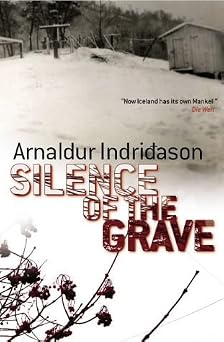
Silence of the Grave: A Reyjavik Murder Mystery
A set of human bones found in reclaimed land sends Reykjavík detective Erlendur back to an unsolved case from decades earlier. Family history, communal memory, and social prejudice intertwine in a cold northern landscape that reveals human frailty and guilt.
Work Information
A buried crime and buried memory resurfacing in the cold.
An Icelandic crime novelist best known for the Erlendur series. He earned international acclaim for his sensitive portraits of bleak Nordic landscapes and social wounds.
Book Information
- Publisher
- Harvill Press
- Published
- 2005-06-28
- Pages
- 224 pages
- Language
- 英語
- Size
- 15.24 x 1.91 x 23.34 cm
- ISBN-13
- 9781843431855
- ISBN-10
- 1843431858
- Price
- 3422 JPY
- Category
- 洋書/Mystery & Thrillers/Mystery
Downtrodden detective Erlendur and his team must once again look into Reykjavik’s hidden past to unravel a case of human nastiness. Alive with tension and atmosphere and disturbingly real, this is an outstanding continuation of the Reykjavik Murder Mysteries.
Arnaldur Indridason worked for many years as a journalist and critic before he began writing novels. He has published several thrillers, but it is for his Reykjavík Murder Mysteries — the series featuring Erlendur and Sigurdur Óli — that he is best known outside his native Iceland. He has won the Glass Key for best Nordic crime novel (both for Tainted Blood and for Silence of the Grave ) and the Martin Beck Award for best crime novel translated into Swedish (for The Voice ). In 2005, Silence of the Grave was awarded the coveted CWA Gold Dagger for best crime novel, an accolade shared with Minette Walters, Reginald Hill, John le Carré and fellow Nordic crime writer Henning Mankell. From the Paperback edition.
Reviews
-
発見された人骨から展開する悲しい人生模様
郊外の工事現場から、50年以上も前の人骨が発見され、刑事 Erlendurと同僚たちは、真相を求めていく。 普通考えると、そのくらい古い人骨から興味深いストーリーが生まれるとは思えない。しかしながら、著者のストーリーの構成は非常に優れており、読者もその真相を求めて、ページを重ねていく。 基本的には悲劇であるが、どこかに救いがあるというのがこの著者の特徴である。 なお、この本は刑事 Erlendurシリーズの2作目となっているが、私が読んだ感じでは、シリーズ1作目とされるJar Cityよりも、この作品の方が筋としては先ではないかと思う。 細かい状況を精密に検討したわけではないのだが、Jar Cityを読んですぐにこの本を購入したが、刑事 Erlendurと彼の娘の関係が、Jar Cityの方が時間的に後でなければならないような展開になっている。
-
エーレンデュル警部ミステリーをすべて読みたくなりました
アイスランドの首都レイキャビクの丘の上の造成地で人骨の一部が発見される。エーレンデュル警部と二人の同僚がその謎の核心にせまっていくのだが、そこで明かされる胸を打つまでに悲しい或る一家の物語。考古学者らが捜査官がしびれをきらすほど時間をかけて少しずつ人骨の全体を掘り出し、ついにその人骨の正体が最後に明かされるのだが、その間、緑のコートを着た謎の女性が造成地付近のアカフサスグリの茂みを時折訪れているという話が聞き込みで出てくる。一体その女性は誰なのか。 その謎が明かされるまでに、読者は数十年前に行方不明になった若い娘の背景や、捜査官たち自身の心の葛藤模様も知る。特にエレンデュールは意識不明の重体に陥っている自分の娘がそうなったのは妻子を棄てた自分にもあると思いながら、時間の許す限り意識のない娘に語り掛ける。話すことが思いつかないエーレンデュルが話すのは捜査している内容だ。無情に見えるエレンデュールの人間味が浮かび上がる。 そして捜査の進行と共に、丘の上に暮らしている一家の妻への壮絶な家庭内暴力のありさまが挿入され語られていく。ひどい暴力にじっと耐えている母親を見守る長男。長女は母親の連れ子で、身体不自由で身動きもままならず言葉を発することもない。その娘につらく当たる父親に対し、長男サイモンが示す優しさ。その優しさがさらなる悲劇を生むという人間模様の究極の悲しさ。しかし読者は最後に思いもかけない一家の行く末に示された一筋の光に救われる。 アイスランドの置かれた厳しい自然のなせる業や、抱えている現代の問題にも読者は向き合うこととなる。 単なる推理小説では終わらない、非常に奥行のある小説。英語も平明で読みやすい。
-
最近流行のトラウマ物・・・少し疲れるが、見事。
Erlendur刑事の二作目だが、前作Jar Cityから引き続いて読むと、Erlendurを取り巻く状況(悲惨)が明らかにされるし、彼のトラウマも最後に分かる。物語は人骨の発見から始まるが、事件の捜査と並行してある悲惨な家庭の物語が語られる。これがあまりにも可哀そうなので、易しい英語、最近では薄い(300ページ以下)分量なのに、一気に読めない。じわじわとおぞましい過去のトラウマが姿を現し・・・背景に第二次大戦中連合軍に問答無用に占領されたアイスランドのトラウマがあるし、冬の暗い生活、おまけに、最近トラウマをやたら作品に取り込んだりすることが世界中で流行しているような気がする。そんな訳で、気が滅入る。途中やめようかと思ったが、作品構成が見事で、最後まで読まされてしまった。悔しいが、味わい深い。ただ少し暗すぎるだろうとボヤキたい。
-
アイスランド・Erlendur刑事・2巻目
物語は工事現場から60年前の白骨が見つかるところから始まります。白骨は考古学者によって掘り出されることとなったため、時間がかかりなかなか鑑定に手がつけられません。その間もErlendur刑事は現場一帯の60年前の状況などを探り出していきます。被害者は、第二次大戦中現場一帯にあった英国軍基地、米軍基地に所属した人のものなのか、あるいは周辺住民のものなのか・・また、物語の中では、現代の捜査と平行して、60年前のDV被害にあっている女性とその子供たちの生活がつづられていきます。果たしてこのDV被害者は遺体に関係があるのか・・・。DV被害にあっている女性の描写は絶望的でつらい気持ちにさせられます。60年前の事件を現代の刑事たちが手がけるというのが新鮮です。
-
イヤなミステリー
DVの記述がしつこすぎて、読んでいてとても不快。他方、恋愛シーンなどはほとんどなく、夢がない。筋の展開も、今時なのにDNAによる死体の本人確認がないばかりか、死体の発掘に時間がかかり、その間に色々な捜査の進展があるという、超のんびりな進展。日本の終戦直後の話じゃないんだから。なんでこの小説が世界中で賞をとっているのかわからない。
-
It's a great reading. Despite a slow pace story, you can't stop before getting to the end. Very good book!
-
Having enjoyed Jar City and discovered a passion for Icelandic Noir genre, it was natural that this book would be next up on my list. At first I was hesitant about it, because of some reviews here saying how dark it is, some saying that it’s darker than Jar City, and with my emotional sensitivity I wasn’t sure I could handle it. I did not find that to be the case at all, maybe just my personal mentality. I find the themes and subject matter sadder, but I would still say Jar City is more chilling and more atmospheric, the real crime investigation type. This one, however, is almost ordinary, in a sense that it could be classified as a family drama of sort. It very much reminds me of genre in Icelandic sagas, the family tragedy. If you’ve read those ‘sogur’ before, you will get a real sense of that tradition being present here. A few moments of suspense and a very riveting read, but nothing like the on-the-edge suspense in Jar City. If you’re worried about it being too dark, I would say it depends how well you handle stories of people being beaten and domestic violence. However, it is as suspenseful and no such a thing as a random corpse or enigmatic artefact turning up at any point. Feels like a historic recounting of a distant tragedy. In terms of the story itself, the plot is just so on-point, so hats off to the author! Everything just fits perfectly, with the double twists at one point, but frankly nothing too expected. The pace is somewhat slower than some of his works, but feels personal to the main protagonist. One if the things that annoys me a bit is the abrupt end, which seems to be Indridason’s style. Like Jar City, it simply ends without explaining certain mysteries along the way, as if the author hasn’t been keeping tap of his various hints. In fact, one storyline concerning a group of individuals needs not be there at all, if not for the purpose of the double plot twist I had mentioned earlier. The fate of some of the important characters that have been developing along the way are just left there, as if it didn’t matter, despite their pivotal contribution to the main storyline. The story takes time to unfold itself, yet somehow towards the end its like the author just got bored of his work and decided it was time to call it quit. Yet I find that to be the case with 90 % of the thriller/ crime fiction these days. Some might find it enigmatic, I call it ’broken ladder,’ like the author can’t quite come up with a way down and jumps head first. Still, a great story over all. Would highly recommend!
-
I knew an Icelander once. That was in Katanga. Primo, Hermit, Blankenstiff and I were hard cases by then, sousing, playing skat all night, rougher games in the daylight. The kid was flung into our mess for seasoning. His name was Thorgrímur Grímurson. Do I need to tell you what grim humor that name evoked? It can scarcely be an accident that the character you will most want to find dead, in #2 of Arnaldor Indridason's novels about dour Inspector Erlendur, is named Grímur. The real identity of the body found in that silent grave, however, will keep you in suspense through 260 pages, as Indridason toys with your suspicions and batters your sensibilities. It would be a shame to leak any clues before Inspector Erlender uncovers them, considering how artfully the author misleads us. If you've already read the first of these thrillers from gritty Rekyavik, you'll know that joy is a rare flower amid the darkness and despair of Erlendur's Iceland. "Silence of the Grave" is a crafty whodunit, very carefully plotted and suspenseful, but even more it's a novel of family dysfunction and tragedy. The skeleton found in a construction site in chapter 1 is just the tangible evidence of the skeletons to be found in every family closet. This second episode is more tightly constructed, and more chilling in its moods, than "Jar City", the first Erlendur novel, but you MUST begin with Jar City nonetheless, and you won't stop while Indridason keeps writing. I've already reviewed Jar City. How's this for a first sentence: "He knew at once it was a human bone, when he took it from the baby who was sitting on the floor chewing it." Uf ta, Arnaldur! Det är mycket mörk! (That's kinda dark! in Swedish, as close as I can come to Icelandic.) The physical descriptions and the emotional portrayals of characters in this novel -- pop fiction though it is, notwithstanding -- are potently realistic, as are the glimpses Indridason offers into the drug-sodden netherworld of the most literate country on Earth. I doubt that the Icelandic Tourist Bureau is gratified by Indridason's international sales. Grímur, in the novel, is a wife-batterer, the nastiest piece of work imaginable, and grimly convincing. Inspector Erlendur is a depressed, haunted failure as a husband and father, and his police colleague Sigurdur portends a similarly grim old age, destined by his psyche to abandon the lover who will -- I'm guessing -- become pregnant by him in the next installment. Meanwhile, Erlender's bipolar drug-addicted pregnant daughter, who freely informs any and everyone how much she loathes her father, interrupts the investigation with a plea for help. Grimmer and grimmer, though redcurrants on the hillsides bloom.... But what about Thorgrímur Grímurson? I can't just leave him stewing in that bug-infested tent, can I? I'm reasonably sure that he deserted the 'firm' after our tribulations in Katanga and pursued a happier career as a writer in his native land, under a different name.
-
A great read
-
Enjoyable
Related Literary Awards
- CWA KAA Gold Dagger Edition 51 (2005) ・Winner