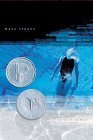
Many Stones
Taken by her estranged father to South Africa, where her sister was murdered, Berry faces family rupture and the possibility of reconciliation while carrying anger and grief. The short novel condenses sorrow and the possibility of reconnection into a tight form.
Work Information
A girl carrying stones on her chest travels with the weight of what has been lost.
A girl carrying the memory of her murdered sister travels to South Africa with an estranged father and confronts the fractures in her family. The restrained prose shows how grief is gradually reassembled into something bearable.
Review Summaries
-
Readers value the way the restrained narration still carries the hurt and reconnection of a family. Within a short novel, the outline of grief is drawn with care.
Book Information
- Publisher
- Front Street
- Published
- 2000-11-30
- Pages
- 158 pages
- Language
- 英語
- Size
- 13.34 x 1.91 x 19.05 cm
- ISBN-13
- 9781886910553
- ISBN-10
- 1886910553
- Price
- 4794 JPY
- Category
- 洋書/Children's Books
When Berry's sister is murdered while working as a school volunteer in Capetown, she journeys with her father to attend her memorial service and soon comes to learn a great deal about the political problems of South Africa through her personal experiences with its countrymen. 10,000 first printing.
National Book Award Finalist Carolyn Coman is the author of Tell Me Everything, What Jamie Saw, and Bee and Jacky. What Jamie Saw received a 1996 John Newbery Honor Award from the American Library Association and was also named a National Book Award Finalist. She has two children and lives in New Hampshire.
Reviews
-
Another outstanding book by Coman. (I've read "What Jamie Saw" and "Tell Me Everything" as well.) This novel deals with the "new" South Africa, something I know about because I lived in South Africa from 1995 to 1998, during the beginning of democracy in a country torn apart by apartheid. Coman obviously has been to South Africa and spent some time there because all of her observations are right on the money: the friendly but blatant racism of some (not all) whites; the expressionless faces of most blacks; the descriptions of Jo'burg, Cape Town and Kruger Park. Her observations were uncanny. Then Coman compares the troubled main character, Berry, with South Africa--a difficult feat for any writer, but Coman pulls it off skillfully. The ending packs a punch with Berry stating her anger at her sister's death and recognizing the pain that many South Africans still carry from the apartheid years. What a book! I do recommend it only for older readers because some profanity is used as well as a reference to Berry's ongoing love affair with a "typical" American teenager.
-
I read this with a student for a summer reading product, and we both found it to be boring. I would not recommend this book at all. I did not feel there was sufficient character development or much of a plot. It was difficult to get through.
-
My granddaughter loved it.