Newbery Medal (John Newbery Medal)
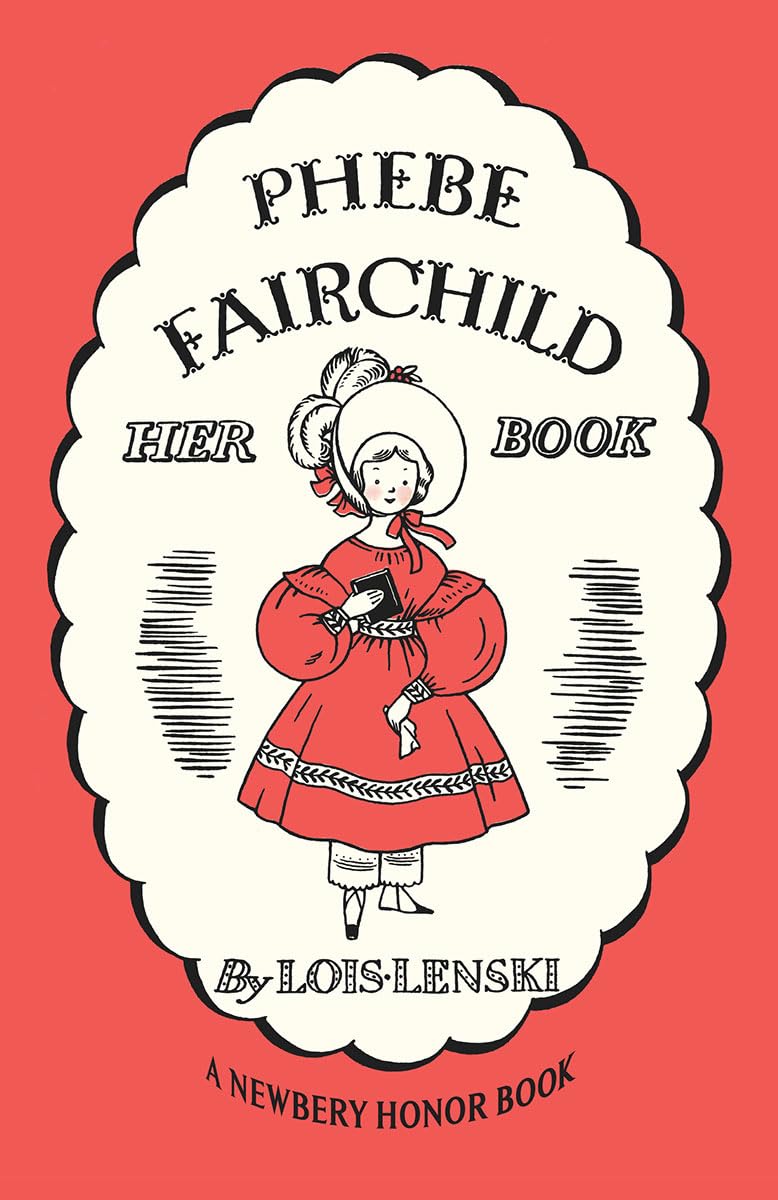
Phebe Fairchild: Her Book Story and Pictures
Set in 1830s Connecticut, this children's novel follows ten-year-old Phoebe as she is pushed into a new way of living by her parents' absence and gradually finds her place through family, faith, and daily work.
Work Information
In 1830s Connecticut, a girl learns what it means to balance family life and independence.
Lois Lenski's historical children's novel brings local life and family feeling into clear focus. Its quiet detail lets a child's growing sense of responsibility emerge naturally from everyday scenes.
Book Information
- Publisher
- Purple House Press
- Published
- 2020-06-01
- Pages
- 316 pages
- Language
- 英語
- Size
- 13.97 x 2.29 x 20.07 cm
- ISBN-13
- 9781948959193
- ISBN-10
- 1948959194
- Category
- 洋書/Children's Books/Literature & Fiction/Historical Fiction
Originally published: New York, N.Y.: Frederick A. Stokes, 1936.
Reviews
-
I've been reading Lois Lenski's books since I was a little girl. Every time I run across one that I haven't read, it becomes another favorite. Her books are always about little children from all walks of life, throughout history. Strawberry Girl has always been my favorite because it was the very first one I ever read when I was about 10 or 11 years old. I think this one is just as beautiful.
-
This is a new edition of an old Newbery Honor book. I was very pleased to add it to my Newbery collection.
-
After two books based on her childhood experiences, Lenski wrote the first of her historical books in 1936. Phebe Fairchild, age 10, is sent to live with her family in the country when her father, a sea captain, takes her mother home to England for a visit and then goes on a voyage to the Mediterranean. Her grandmother, aunts, and cousins are all welcoming and nice, but they are also strictly religious; Phebe doesn't dare show them her frivolous Mother Goose book, nor the jewelry her mother entrusted her with. Lenski basically wrote this story as a "slice of life" tale of, as she explains, "child life and country life in 1828 Connecticut," when the United States was on the cusp of becoming an industrial nation. Phebe is one of the witnesses to the expansion of canals to carry goods rather than "freighters" and machine-made goods instead of homespun. Phebe herself is a rather bland little girl, except for one incident of rampant disobedience with a visitor's clothing, so the main charms of this story are noting the upbringing of children in the early 19th century, the sheer hard work of country life, but also of the pleasures and the feasts, of typical plays and pranks of the era, the changes industrialization were already bringing and the resistance of elders to it, and of the unceasing labor of women. In later historical books, Lenski would add some danger or mystery into the story (the pirate character in OCEAN BORN MARY, the arduous pioneer journey in A'GOING TO THE WESTWARD etc.) rather than having a simple series of incidents in a child's life. Indeed, according to the notes on this book, Lenski had to be encouraged to put all her fascinating research in the background and focus on her main character! Still worth reading for Lenski's research and the glimpse into 1820s American rural life, but not for every child--it should be a tween who's really interested in history.
-
I have not read this book yet, but I'm familiar with the author and wanted more books by her, so I can read them to my grandchildren. I'm very happy the book arrived in pristine condition.
-
I’ve been collecting Lois Lenski’s books for awhile now. I was glad to add this one to my collection.