アンドリュー・カーネギー成人向けフィクションおよびノンフィクション優秀賞
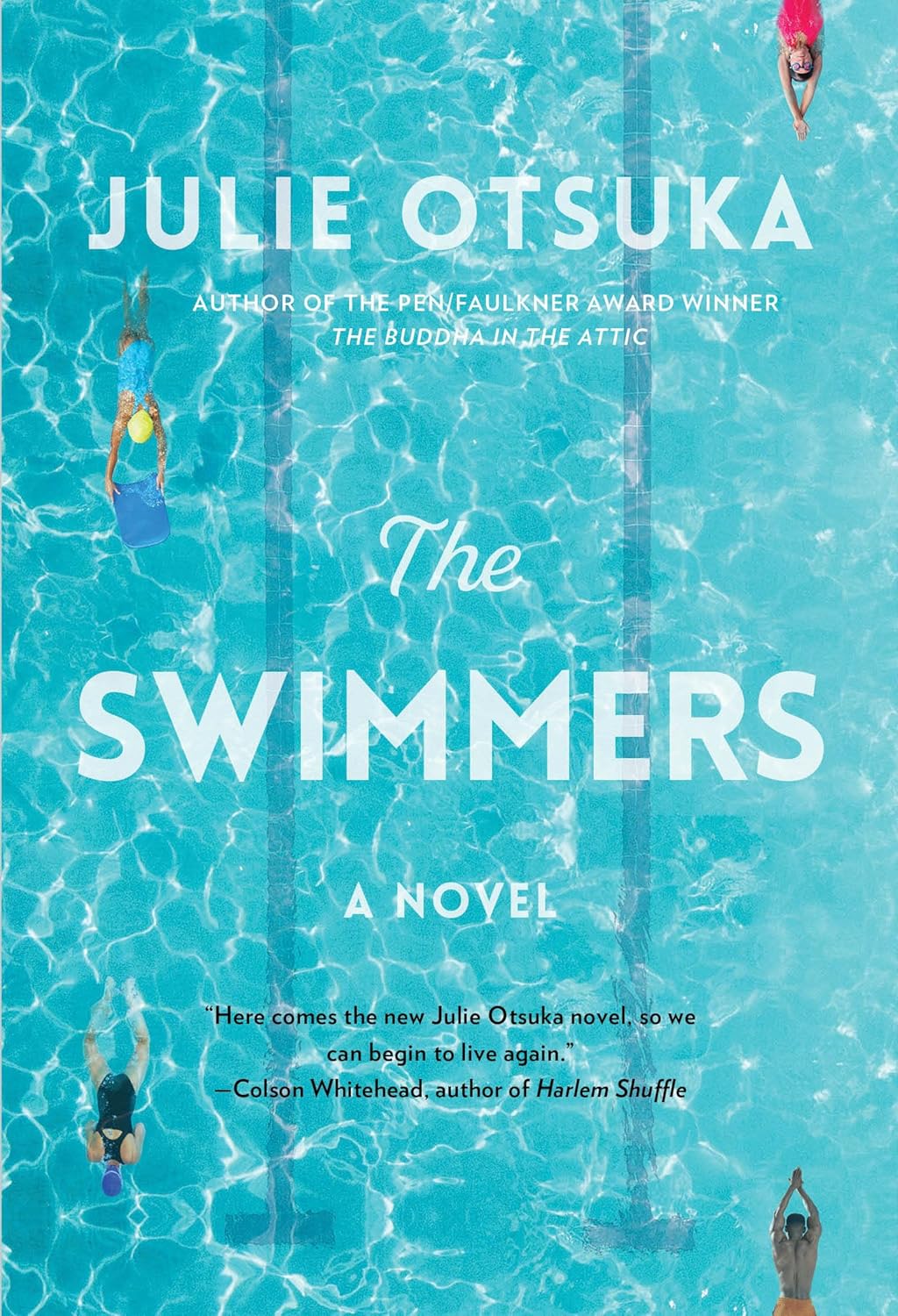
The Swimmers: A novel
いつものプールに通う人々の静かな日常が、ひびの入った水面をきっかけに崩れていく。記憶が薄れていく母と娘の関係を中心に、喪失とケアの痛みを描く小説。
作品情報
プールのひび割れが、家族の記憶のひび割れへとつながっていく。
『The Swimmers』は、ひとつのプールを共有する人びとの反復的な日常から始まり、やがて認知症の進行と家族の関係の揺らぎへと広がっていく。静かな筆致のなかで、習慣が崩れるときに立ち上がる不安と愛情を描き出す。
書籍情報
- 出版社
- Knopf
- 発売日
- 2022-02-22
- ページ数
- 192ページ
- 言語
- 英語
- サイズ
- 13.18 x 1.98 x 19.08 cm
- ISBN-13
- 9780593321331
- ISBN-10
- 0593321332
- 価格
- 2949 JPY
- カテゴリ
- 洋書/Literature & Fiction/United States/Asian American
NATIONAL BESTSELLER • CARNEGIE MEDAL FOR EXCELLENCE WINNER • From the award-winning author of The Buddha in the Attic and When the Emperor Was Divine comes a novel that "starts as a catalogue of spoken and unspoken rules for swimmers at an aquatic center but unfolds into a powerful story of a mother’s dementia and her daughter’s love" ( The Washington Post ). The swimmers are unknown to one another except through their private routines (slow lane, medium lane, fast lane) and the solace each takes in their morning or afternoon laps. But when a crack appears at the bottom of the pool, they are cast out into an unforgiving world without comfort or relief. One of these swimmers is Alice, who is slowly losing her memory. For Alice, the pool was a final stand against the darkness of her encroaching dementia. Without the fellowship of other swimmers and the routine of her daily laps she is plunged into dislocation and chaos, swept into memories of her childhood and the Japanese American incarceration camp in which she spent the war. Alice's estranged daughter, reentering her mother's life too late, witnesses her stark and devastating decline.
JULIE OTSUKA was born and raised in California. She is a recipient of a Guggenheim Fellowship, and her first novel, When the Emperor Was Divine won the 2003 Asian American Literary Award and the 2003 American Library Association's Alex Award. Her second novel, The Buddha in the Attic, was a finalist for the National Book Award in 2011 and won the 2012 PEN/Faulkner Award for Fiction and the 2011 Langum Prize in American Historical Fiction. The Buddha in the Attic was an international best seller and the winner of the prestigious Prix Femina Étranger in 2012, and the Albatros Literaturpreis in 2013. She lives in New York City.
レビュー
-
戦時中に日系人の強制収容所を体験した認知症の母と作者の、回想録に近い連作短編集
とあるスポーツセンターの地下にある水泳プールで泳ぐ常連たちには、彼らにだけ通じるルールや常識がある。プールの外では偉い肩書を持っていても、ここではひとりのスイマーでしかない。週に5日定期的に現れて、延々と1時間泳ぎ続ける人たちは、そうしないではいられない人々なのだ。その常連スイマーのひとりは、認知症(前頭側頭型認知症、ピック病)を発症したAliceだ。プールの仲間のうちには「Aliceに親切にするように」という決まりがある。ところが、ある日、地下にあるプールの底に亀裂が現れ、彼らの日常はすっかりと変わってしまう。泳ぐ習慣だけは忘れなかったAliceだが、泳ぐのをやめた後には認知症が進行して施設に入所することになる……。 連作短編集のように視点が異なる短い物語で繋がるこの小説は、最初のうちはプールの常連たちの異なる人生が紹介される印象を与える。だが、進んでいくうちにAliceと認知症がテーマなのだとわかる。そして、AliceがThe Buddha In The AtticとWhen The Emperor Was Divineの作者として知られるJulie Otsukaの母だということもわかってくる。小説のカテゴリだが、登場するAliceの娘の職業や私生活もOtsukaそのものなので、後半はほぼ回想録として読んでいた。 Otsukaのリリカルな文章は、内容がどの方向に行っても心地よく読める。だが、この作品については、前半と後半では異なる本のように感じた。プールの亀裂とAliceの認知症とを関連させることもできるが、それがうまく効果を成しているとは思えなかったのだ。 ページ数が少ないし、文章もシンプルなので、分厚い英語の本に怖気づく人におすすめ。
-
This is an exceptional book about how it is the ordinary things we do everyday that makes us who we are - not the money we have, the property we own or the qualifications we achieve. This is an exploration of the widespread loss caused by dementia - the disintegration of self, the loss of global skills and executive function, the depersonalisation, the bleak, stark devastating sadness, fear and panic of dementia. It’s also about the loss experienced by the family of someone with dementia and the anticipatory grief that comes with watching someone you love disappear into their dementia. It is a profoundly moving book that is so beautifully written that it almost aches to read it; and yet, despite the deep visceral sadness it is, at its very core, incredibly calming and carries a thought provoking and important message about treasuring the value in the ordinary mundanity of daily life and the things that we take for granted.
-
I loved this book. Divided in 5 chapters. The first two chapters formed an original novella. The titular “swimmers” is what is contained within those two chapters. A colorful community of multitude of characters, all swimmers, all escaping from the daily crazies and chaos of the real world. The community is thrown into an uncertainty when an unexplained crack appears in the pool. I was fascinated by the descriptions of all the individuals and how they responded to this calamity. Julie painted a picture and I could very well see myself in it. The other half of the book focuses on Alice, who is being stripped off of her memories by dementia. Her slow decent to this cruel disease is narrated by her estranged daughter in a very impactful and emotional manner. There’s one chapter that was written from the POV of the institute Alice is admitted to. All rules, no fun. I could hear the voice of authority in the narration. It was heart wrenching. Bookstagram Pratgarg_
-
Lovely book, even though I was surprised the original story took another point of view two thirds of the way through. If you are a regular swimmer at a local pool, then this book has a lot of moments of recognition!
-
Excellent book that challenges the reader with its innovative style at first, but well worth persevering. Otsuka’s novel about a family dealing with dementia is enthralling and moving.
-
It's difficult to review a book as heartfelt and true as The Swimmers. Julie Otsuka has written a masterpiece that will be with me forever, The novel is about Alice, a woman with Pick's disease, a type of dementia. The narrative follows the relationship between Alice and her daughter as Alice's disease progresses. The daughter is a writer and the novel has some of the aspects of the best memoirs. This short novel starts with a chapter about swimmers in an underground pool, probably a YMCA. Each swimmer obeys the pool's unspoken rules and keeps to the same lane every day. They are happy to be away from the hustle and bustle of 'the'outside'' because in the pool everything is quiet and peaceful, perfect for all the swimmers. One day, however, a crack appears at the bottom of the pool and this is horribly upsetting to the swimmers. What can it be and what caused it? As the book progresses, I found it a clear metaphor for the beginning of Alice's demise, the crack in her mind so to speak. The next chapter, Diem Perdidi, is a short story, one I believe that Ms. Otsuka has previously published. It is about the progression of her mother's dementia as her daughter looks on. Diem Perdidi, translatesd something like 'the lost day', is beautifully rendered as is the profound sense of loss it conveys. Ultimately, Alice is sent to reside in a long-term care facility that is regimented, cold, and like many medical facilities, caring more about the profit than the patient. I loved the parts of the book that explored the daughter's relationship with Alice, especially her distance from her mother since leaving home for college. Alice sounds like a powerhouse in her youth but it is easy to see how fractious a mother/daughter relationship might have been. Ms. Otsuka writes like no other author. She is unique in her style which I found mesmerizing and lyrical. The book never slows down. It rides, like the wind, on the beauty of the author's words. Her style reminded me of music, with its repetitions and short rifs. The composers Erik Satie and Philip Glass come to mind. This will be one of my top 10 books of 2022 and one of my favorite novels of all time.