The first volume of the annual anthology launched by Stephen Jones and Ramsey Campbell, it gathers a wide slice of that year's horror and dark fantasy. Through its selected stories, the book reflects the energy and changing shape of the genre at the time.
When actress Nelly Ternan met Charles Dickens in 1857, she was eighteen and he was forty-five, a celebrated and married author. Their relationship lasted thirteen years and destroyed his marriage, while erasing Nelly from the public record. Drawing on diaries, correspondence and photographs, Claire Tomalin reconstructs the hidden life of a Victorian woman and provides fresh insight into the greatest novelist of the age. Winner of the 1990 James Tait Black Memorial Prize for biography.
Martin Bauml Duberman, Martha Vicinus, George Chauncey
Hidden from History: Reclaiming the Gay and Lesbian Past is a landmark anthology edited by Martin B. Duberman, Martha Vicinus, and George Chauncey that brought together, for the first time, vital new scholarly work lifting the veil from the gay and lesbian past. Spanning thirty essays by leading researchers including John Boswell, Jeffrey Weeks, and John D'Emilio, the collection illuminates same-sex life across an extraordinary range of cultures and eras—from Plato's Athens and Renaissance Italy to Jazz Age Harlem, Revolutionary Russia, Nazi Germany, and post-World War II San Francisco—and across peoples as diverse as South African black miners, American Indians, Chinese courtiers, Japanese samurai, English schoolchildren, and urban working women. By demonstrating that definitions of 'normal' sexuality have varied widely across time and place, the anthology established the scholarly legitimacy of gay and lesbian history and set the agenda for decades of subsequent research.
A coming-of-age novel about Billy, a boy immersed in the gangster world of the 1930s. Through the criminal underworld around real-life gangsters, it depicts loyalty, betrayal, power, and a vivid historical milieu.
A Newbery Honor Book - from the author of The White Stag Life on the Hungarian plains is changing quickly for Jancsi and his cousin Kate. Father has given Jancsi permission to be in charge of his own herd, and Kate has begun to think about going to dances. Jancsi hardly even recognizes Kate when she appears at Peter and Mari’s wedding wearing nearly as many petticoats as the older girls wear. And Jancsi himself, astride his prized horse, doesn’t seem to Kate to be quite so boyish anymore. Then, when Hungary must send troops to fight in the Great War and Jancsi’s father is called to battle, the two cousins must grow up all the sooner in order to take care of the farm and all the relatives, Russian soldiers, and German war orphans who take refuge there. “A spontaneous, lively tale”— The New York Times
Contact with an alien intelligence and a risky exchange of energy on a cosmic scale quietly destabilize the assumptions of human civilization. The novel unfolds in three interlocking sections and stands among Asimov's major works.
Karen Tei Yamashita's debut novel uses outrageous characters such as a Japanese man, a three-armed CEO, and a Brazilian peasant to satirize the destruction of the Amazon rainforest and the absurdities of global capital.
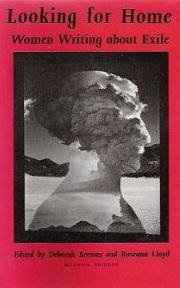
Edited by Deborah Keenan and Roseann Lloyd, this anthology gathers women poets writing about migration and exile. It layers many voices around loss of home, displacement, and the unstable idea of belonging.
A photo-driven survey of the cultures and landscapes of Ethiopia and the Horn of Africa. Religious ritual, body decoration, and local ways of life are presented in richly visual form.