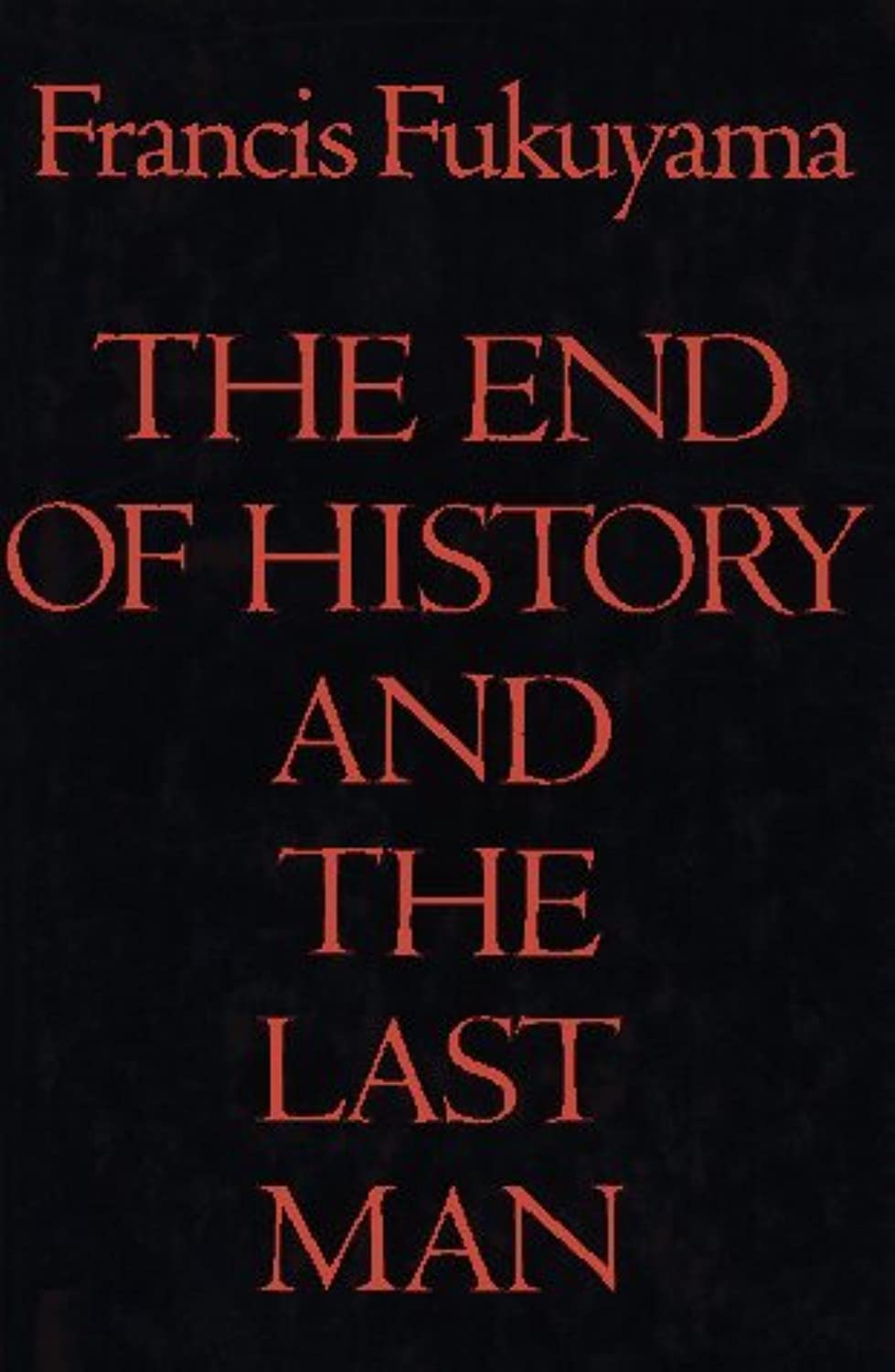
END OF HISTORY AND THE LAST MAN
冷戦終結後の世界における政治体制の将来を問い、自由民主主義が歴史的にどう位置づけられるかを論じる政治思想書。歴史進行の見取り図と人間性に関する示唆を提示する。
作品情報
政治哲学者として冷戦後の国際政治や民主主義に関する論考で知られる。
書籍情報
- 出版社
- Free Press
- 発売日
- 1992-01-31
- ページ数
- 352ページ
- 言語
- 英語
- サイズ
- 15.88 x 1.91 x 24.13 cm
- ISBN-13
- 9780029109755
- ISBN-10
- 0029109752
- 価格
- 3800 JPY
- カテゴリ
- 洋書/History/Americas/United States
Debates whether or not history has an end, defines two forces of human nature that continue to drive civilizations toward democracy, and tries to predict whether or not humankind will want to sustain democracy in the future
レビュー
-
この本を読む前に知っておくと得すること。
(1)まず英語圏の人はほぼ誰もがこの長い本より最初に出版された短いバージョンのエッセイのほうが、要点が詰まっていて優れているといいます。その短いバージョンは日本では出版されてませんが、合法的にオンラインで公開されておりグーグルすると簡単にでます(英語ですが)。(2)”LAST MAN"を邦題で最後の人間と訳したのは問題だと思います。哲学を知ってる人にとっては”Last Man"といえばニーチェでいう人生に疲れ、冒険心や勇気をなくした、おとなしくなったような人を指すことがわかりますが、一般の人にはわかりにく。(3)フクヤマの先生であるSamuel P. Huntingtonがこの本に対する反論として出した「文明の衝突」と合わせて読むのがほとんど必須です。どちらがより正しかったのかは、9・11のテロ事件の後、いまだに議論されたます。(きちんと読んだ人には答えは明らかですが)
-
流れるようなきれいな英語で魅了されました。
英語のペーパーバックを出張の帰りに買って電車の行き帰りそして風呂で寝室で 結局2冊買いその後日本語訳も買い最後にこの重い本も記念に買いました。 90年の前半には彼の説を本当に信じていましたがそうはならなかったけれど 少なくとも哲学の洞察力には脱帽でした。 英語もこんなきれいな英語の本を読める時間を感謝しました。日系人は沢山会ったけれど 皆素直で優秀でいつも刺激を受けました。 数学では負けなかったけれど大学時代 理論的な議論はかわいい顔をして日系人は白人を打ち負かしていたのを 昨日のように思い出します。
-
30年後の再読
この作品は未読の作品ではないが、最近読んだ佐伯啓思氏の「近代の虚妄」で、出版当時話題となった「歴史の終わり」ではなく、「最後の人間」の観点から、本作品が詳しく取り上げられており、気になり再読。ほぼ30年ぶりにゆっくりと読んでみた。 いうまでもなく、この種の作品を現時点で再読ということになると、共産主義の崩壊ではなく、どうしても中国とイスラムをどのように取り上げていたのかという観点が主となるのは、しょうがない。著者にとっては、後出しじゃんけんのようで、不本意だろう。 たしかに、中国とイスラムは本書でも取り上げられている。ただスペースはあまりさかれてはいない。この時点(1992年)では、冷戦でのアメリカの勝利の高揚感が残っているようで、この両者がリベラル・デモクラシーと本質的に敵対する点は理解されているものの、どちらも, 特に中国に関しては、さらなる資本主義の発展の先に、この両者の質的な進歩・転換(「歴史の終わり」の全世界での実現)が暗黙の内に想定されていたようだ。 中国の人口が12億、イスラム教徒は16億人、世界の人口は78億人。というと、この両者を合わせると、世界の約40%近くはliberal democracyへの段階を明確に否定している政治体制の下に暮らしているわけで、決して「歴史の終わり」が普遍化したり、その実現への過程にあるといえるような状況ではないことは明々白々。むしろ「歴史の巻き戻し」が始まったといえるのかも。 肝心の本家本元米国のliberal democracyすら、social justice warrior(SJW: 社会正義の戦士)たちの跋扈で、息も絶え絶えといったところだろう。ただこの点に関しては、著者により明確に意識されていたのは、さすがだ。 「リベラル・デモクラシーに対する左派からの将来の脅威は、民主主義の諸制度や原理に対する正面からの攻撃を仕掛けるよりは、リベラリズムという衣装をまといながらも、リベラル・デモクラシーの持つ意味を、その内部から、変えていこうとするだろう。」 ところで、今amazonを見たら、「After the End of History: Conversations With Francis Fukuyama」という新作が5月に出るようなのだ。
-
読む前提の知識が高度すぎて
かつては相当話題になったし良書なのだろうけど、なにぶん分からないことが多かった。例えばヘーゲルが多く引用されていて、彼の業績や思想史における意味づけ、および思想体系の基軸が分からなかったので原書の読了後も腑に落ちなかった。私の勉強不足なのかもしれない。
-
Opinion
Opinion: どうにも古めかしい「歴史」で'る。 社会の政治体制は、進化を続け、ようやく民主主義が世界を被い尽くす「歴史の終わり」が来た。人類の進歩はようやくここに到達した。 果たしてそうだろうか。もはや、そうした単純な進歩史観を受け入れられるのは、一部のアメリカ人くらいのものではなかろうか。 政治体制も経済体制も一長一短なのだから、何もアメリカ流のコンテストをやって勝ち抜き戦をやる必要は無い。 '''' Giorgio Kostantinos '''gx '' The Quest A great novel, definitely worth your time.
-
アメリカ万歳
この本の内容は「アメリカ万歳」のひとことであらわせる。この一言である。これまで人類は色々な政治体制を経験し、そして今日もいろいろな政治体勢が存在する。しかし著者はそれらはやがて「アメリカ型民主主義」に収束してゆき、「アメリカ型民主主義」こそが人類最後の社会体勢であり、そこに至る道のりこそが「歴史」であるとしている。 しかし、この種の発言は覇権を握った超大国が陥りがちな傲慢に過ぎない。なぜなら歴史とは、「歴史の終焉」を宣言した覇者たちが滅び行くその過程なのだが。
-
para entender o mundo atual!
Muito bom o livro sobre como os eventos da historia estão levando o ser humano para nao ter mais o que contar, ou seja o fim da historia. O autor narra os diferentes modelos políticos e econômicos do mundo e deixa claro que todos os países caminham para a democracia, e que a democracia e liberdade trará um momento em que sera difícil de escrever a historia pois todos os países serão iguais.
-
Getting more relevant every day
Toward the end of the Cold War, three very different books were published within five years of each other that sought to explain the likely contours of the inchoate new world order emerging from the implosion of the communist bloc: David Kennedy's "The Rise and Fall of the Great Powers" 1989); Francis Fukuyama's "The End of History and the Last Man" (1992); and Samuel Huntington's "The Clash of the Civilizations"(1994). The second in this triumvirate is the deepest intellectually, one might even say profound, yet the most widely misunderstood and often ridiculed. The vast majority of critics, I'm convinced, never actually read the book, as Fukuyama's thesis is sober and thoughtful. Unlike Kennedy's thesis, which is based on relative economic growth rates, or Huntington's, which is rooted (I would argue) in cultural anthropology, Fukuyama's argument is built upon the foundation of modern western philosophy. For those, like me, who only have an armchair education in philosophy, "The End of History" will be both a primer on the basic tenets of liberal political theory and a compelling argument for the spread of both capitalism and democratic representative government. Fukuyama's argument is direct, but cerebral, and fundamentally grounded in the political philosophy of early 19th century German philosopher Georg Hegel, and supported by the further interpretations of Hegel by fellow German Friedrich Nietzsche and the 20th century French-Russian philosopher Alexandre Kojeve. At the dawn of the twenty first century, Fukuyama writes, there were two undeniable trends in global affairs: a movement toward market capitalism on the one hand, and a shift toward liberal democracy on the other. He notes that these two trends are not, at least superficially, mutually reinforcing. In fact, one could argue that they should naturally work against each other. After all, authoritarian regimes in East Asia (Taiwan, Singapore, South Korea, China) have proven that dramatic, market-oriented economic growth does not rely on a liberal political order. Indeed, democracy may actually stymie the efficient allocation of central resources toward critical infrastructure projects. Fukuyama sees Hegel's "need for recognition" as the missing link tying liberal economics with liberal political democracy. This book is broken into five parts. The first two provide a background on the philosophical argument behind "The End of History" as posited by both Hegel and Marx, who agreed on the basics but reached radically different conclusions on the end point. Fukuyama maintains that politics is more like natural science than art or literature - its trajectory is directional and cumulative, with each generation building upon the efforts of the past, unlike the more liberal arts whose value remains subjective across the ages. (e.g. Are paintings or architecture better today than in ancient Greece or fin-de-siecle France? Depends who you ask. Are we more advanced in physics than those societies? No doubt. Fukuyama claims government is more like physics than art.) I found part three to be the most informative and fascinating. Fukuyama explains that part of the problem with Hegel's focus on "recognition" in political philosophy is that there is no one word in English that accurately captures the true meaning. Machiavelli spoke of "glory," Hobbes of "pride," Rousseau of "amour-propre," Hamilton of "fame," Madison of "ambition," and Nietzsche of "the beast with red cheeks." Fukuyama makes a strong case for Plato's Greek word "thymos," the same word and concept that Jonathan Shay uses to develop his convincing hypothesis on the nature of moral degeneration after close order combat in his brilliant piece "Achilles in Vietnam." In short, every man, no matter his station in life, has a natural sense of self-worth, of dignity, and when that sense of personal dignity is violated the reaction can be severe. When we don't live up to our own estimate of thymos we feel shame, and when we do we feel pride. And when someone else, especially those in positions of power or authority, fail to recognize our thymos we feel indignation (or, as Shay wrote about Achilles and soldiers in Vietnam, rage). Thus, a healthy political order needs to be more than a basic social contract between man and his government, exchanging some personal rights in exchange for the ability to acquire property (what the Founders referred to as "happiness"), a sort of mutual societal non-aggression pact. Rather, it must also somehow serve man's desire for recognition, of his dignity and worth. In part four Fukuyama presents his central thesis of the desire for recognition as the motor of history, looking at the recent past and projecting into the future some of the different ways the desire for recognition will be manifest. He notes that it was present in the people who fought for greater representation in right-wing authoritarian regimes in the 1970s and 1980s (Spain, Greece, South Korea, Philippines, Taiwan, etc.) and against communist dictatorships at the end of the Cold War - and arguably what is driving the Arab Spring movement across North Africa and the Middle East. The governments rocked by pro-democracy movements span most continents and cultures, include nations that have experienced rapid economic growth and others that have been moribund for decades, and have sought to overthrow or dramatically reform regimes that range from the far left to the far right. The common denominator, Fukuyama argues, is that they failed to satisfy the collective thymos of their people, as only liberal democracy can do that. The fifth and final chapter addresses the question of the "end of history," what the final end state looks like, the so called "last man," as liberal democracies wrestle with their inherent contradiction that they treat unequal people (i.e. based on talent and success) equally. In closing, this is a marvelous, thought-provoking book that, in light of the Arab Spring (depending how that turns out), may come back into fashion nearly a generation after its initial publication. Huntington's "Clash of the Civilization" may still stand as the leading interpretation of the post Cold War international order, but "The End of History" is still very much in the race and gaining ground everyday.
-
Book in good conditions. Great read.
Excellent pre-loved book. In very good conditions.
-
intégrité du produit et célérité de la livraison
c'est exactement ce que je voulais.
-
deep, philosophical and entertaining
I like this book for its attempt to go deep in exploring the political order - looking at the nature of a man and the essence of life. At the same time, it combines this depth with entertaining examples, making it fun to read.